Porcini nutrition: reading the Ciqual 2025 values
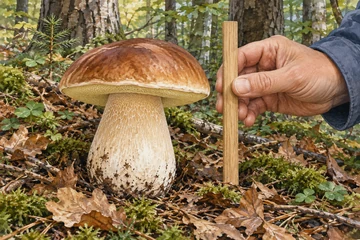
The Ciqual 2025 entry ‘Mushroom, porcini, raw’, code 20160, describes Boletus edulis. It is a composition reference, not an instruction to eat it raw.
Reference values
Per 100 g, the official file gives 121 kJ and 28.8 kcal, 90.3 g water, 3.23 g protein, 2 g carbohydrate, 0.49 g fat and 2.12 g fibre. Values were extracted from the [Ciqual 2025 table](https://doi.org/10.57745/RDMHWY), without replacing missing fields with zero.
A food average with a specific scope
The table describes a representative food, not an analysis of your harvest. In commerce, the word porcini may cover several species; this row names Boletus edulis. Retain the product's identity and state when comparing another source.
From porcini to the finished dish
Water loss during preparation changes composition per 100 g. Oil, butter, cream and accompaniments add their own nutrients. Multiplying the raw porcini value by the weight of a whole panful does not calculate that recipe correctly. Weigh the ingredients and the result if you wish to estimate the dish.
Composition and safety
The qualifier ‘raw’ describes the table sample. The FSVO recommends not eating mushrooms raw and having wild harvests checked. Low energy content demonstrates neither safety nor a therapeutic effect. The biological account remains necessary for identification.
Related guides and articles
Show 20 more articles

- Cep soil: what the map and terrain say separately
- Porcini season: a calendar for several species
- Trees associated with porcini: proximity, stand and evidence
- Recognising porcini
- Porcini and boletes: a subset, not two opposing groups
- Slimy porcini: wet surface or deterioration?
- Growing porcini: root association and production are two aims
- Porcini prices: species, provenance and cost after sorting
- Penny bun
- A yellow cep
- Freezing ceps: prepare portions that are easy to cook
- Storing ceps: track the condition of stem, cap and tubes
- Must ceps be peeled? Cleaning without removing the whole cuticle
- Cep powder: start with an identified dried product
- Drying ceps: prepare inspectable slices
- Cleaning ceps: examine the interior too
- Cooking fresh ceps: distinguish sorting, cutting and browning
- Removing cep tubes: a choice of condition and texture
- Raw ceps: gastronomic reputation and health recommendation
- An old cep: flesh condition matters more than size
 Sources and review