Ceps and toxic boletes: distinguishing names and features
The word bolete covers more species than the usual ceps. Pore colour, stem reticulation and a colour reaction must be examined together.
Common and scientific names answer different questions
In MycoWiki, the four usual cep profiles provide separate starting points: penny bun, pine bolete, bronze bolete and summer bolete. The name “bolete” does not automatically assign a harvest to one of these profiles.
The devil’s bolete is now named Rubroboletus satanas, with Boletus satanas as its basionym. Index Fungorum preserves this nomenclatural relationship. An old reference under Boletus satanas may therefore concern the same taxon, without that name turning it into a cep.
The creation of Rubroboletus in 2014 rests on morphological features and molecular data. This change illustrates why a formerly broad genus must not be used as an edibility shortcut.
A documented example: the penny bun
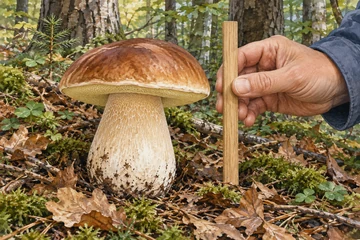
MycoDB describes Boletus edulis as having initially white to cream pores, becoming greenish yellow, and white reticulation on the upper stem. The flesh is described as white and unchanging. The profile nevertheless mentions possible very slight pore blueing on touch. This nuance is enough to reject an absolute rule based solely on a colour reaction.
The other ceps require their own descriptions. Retain cap structure, underside, stem and context for each. Features observed on one specimen must not complete those of another in a mixed basket.
The devil’s bolete: several structures to compare
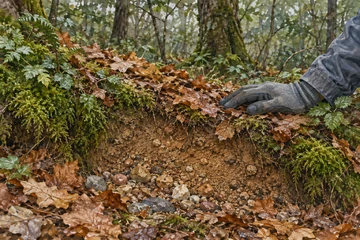
The Rouen factsheet describes a pale cap and a massive stem bearing red reticulation; the pores become reddish during development. Lyon 1 describes a warmth-loving context on calcareous soil, notably under oaks. These elements must be read together within the scope of these European descriptions.
| Part | Information to compare |
|---|---|
| Cap | Colour, texture and specimen condition |
| Pores | Actual colour and developmental stage |
| Stem | Shape, reticulation or other ornamentation |
| Flesh | Appearance and observed reaction, without tasting |
| Habitat | Documented context, without inferring soil from an impression |
Red colour or blueing remains descriptive information. The abstract of the Rubroboletus revision combines several features; it does not provide a consumption rule based on a single colour.
Toxicity and cooking: what the cases show
A retrospective Inselspital study in Bern covering 2001-2017 reports poisonings attributed to the devil’s bolete, including after eating cooked mushrooms. Cooking described in a case is therefore not proof of the mushroom’s acceptability. This hospital series defines neither a current national incidence nor a detoxification protocol.
The dossier describes a toxic taxon and the available evidence. It does not repeat the time to return to normal stated in an educational factsheet: such a delay cannot serve as a prognosis for a reader. Suspected ingestion uses the mushroom poisoning pathway.
Preparing a comparison in MycoRadar
Use the four Guide profiles to examine features of an identified candidate, then the look-alike comparison method to retain points that do not agree. Underside and complete-stem views provide information that a cap portrait does not. The conditions score plays no role in identifying the taxon or its toxicity.
International scope
Nomenclature can be shared between languages, while the descriptions and cases cited retain their region and period. Outside Europe, compare with similar local species rather than adopting names from a European book.
Related guides and articles
Show 20 more articles

- Porcini season: a calendar for several species
- Trees associated with porcini: proximity, stand and evidence
- Porcini nutrition: reading the Ciqual 2025 values
- Recognising porcini
- Porcini and boletes: a subset, not two opposing groups
- Slimy porcini: wet surface or deterioration?
- Growing porcini: root association and production are two aims
- Porcini prices: species, provenance and cost after sorting
- Penny bun
- A yellow cep
- Freezing ceps: prepare portions that are easy to cook
- Storing ceps: track the condition of stem, cap and tubes
- Must ceps be peeled? Cleaning without removing the whole cuticle
- Cep powder: start with an identified dried product
- Drying ceps: prepare inspectable slices
- Cleaning ceps: examine the interior too
- Cooking fresh ceps: distinguish sorting, cutting and browning
- Removing cep tubes: a choice of condition and texture
- Raw ceps: gastronomic reputation and health recommendation
- An old cep: flesh condition matters more than size
 Sources and review