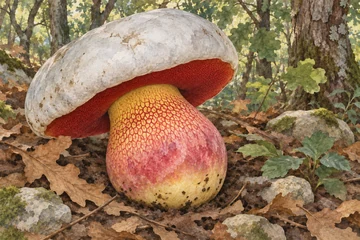
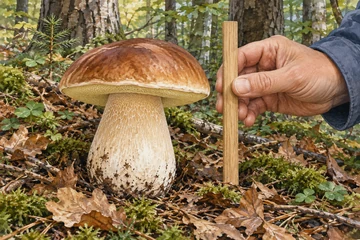
An old cep: flesh condition matters more than size
A large cep is not necessarily deteriorated, and a small specimen may be. Product condition is assessed using several elements after identification.
Maturation and deterioration
In Boletus edulis, pores change colour during maturation. This biological development is distinct from softened tissues, tunnels and spoilage. Underside colour alone gives no verdict on the whole specimen.
Open after examination
A section reveals the inside of stem and cap. Observe flesh firmness, damage and altered areas. Retain the base useful for identification before this preparation. A firm exterior does not prove the condition of all other parts.
The batch's history
Transport duration, heat, water and storage complement examination. Health sources require an appropriate fresh state before use. An old cep kept warm is not assessed like a large specimen recently collected.
Do not salvage through processing
VAPKO advises leaving specimens that are too old or heavily eaten. Removing tubes, drying or freezing does not correct product deterioration. A rejected specimen can remain in place for its ecological role and be documented by photograph without entering the food basket.
Related guides and articles
Show 20 more articles

- Cep soil: what the map and terrain say separately
- Porcini season: a calendar for several species
- Trees associated with porcini: proximity, stand and evidence
- Porcini nutrition: reading the Ciqual 2025 values
- Recognising porcini
- Porcini and boletes: a subset, not two opposing groups
- Slimy porcini: wet surface or deterioration?
- Growing porcini: root association and production are two aims
- Porcini prices: species, provenance and cost after sorting
- Penny bun
- A yellow cep
- Freezing ceps: prepare portions that are easy to cook
- Storing ceps: track the condition of stem, cap and tubes
- Must ceps be peeled? Cleaning without removing the whole cuticle
- Cep powder: start with an identified dried product
- Drying ceps: prepare inspectable slices
- Cleaning ceps: examine the interior too
- Cooking fresh ceps: distinguish sorting, cutting and browning
- Removing cep tubes: a choice of condition and texture
- Raw ceps: gastronomic reputation and health recommendation
 Sources and review