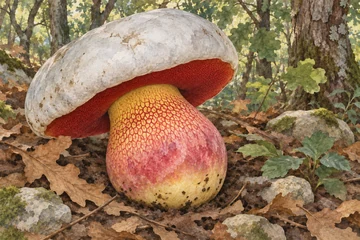
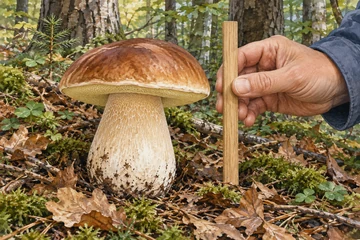
Growing porcini: root association and production are two aims
For porcini, the tree relationship makes cultivation different from growing a fungus on substrate alone. The word ‘mycelium’ does not guarantee a harvest.
Define the intended result
Laboratory growth, a colonised root and fruiting are three results. A protocol must specify which was achieved, for which taxon and under which conditions. A porcini photograph on packaging documents none of these events.
The tree association
INRAE describes controlled mycorrhization for certain forestry systems and truffle production. These successes do not automatically constitute a reproducible Boletus edulis cultivation method. Each species and partner combination requires its own data.
Read a commercial promise
Look for verifiable material identity, a published method, repeated results and field conditions. Distinguish proposed inoculation from demonstrated production. This dossier has no validated home protocol yielding porcini in a Swiss garden.
Preserve the habitat
A forest can serve for observing existing associations rather than unstudied additions. Do not introduce material or amendments to test a promise in a natural site. Mycorrhization research specifically considers compatibility and community effects; monitoring must retain this complexity.
Related guides and articles
Show 20 more articles

- Cep soil: what the map and terrain say separately
- Porcini season: a calendar for several species
- Trees associated with porcini: proximity, stand and evidence
- Porcini nutrition: reading the Ciqual 2025 values
- Recognising porcini
- Porcini and boletes: a subset, not two opposing groups
- Slimy porcini: wet surface or deterioration?
- Porcini prices: species, provenance and cost after sorting
- Penny bun
- A yellow cep
- Freezing ceps: prepare portions that are easy to cook
- Storing ceps: track the condition of stem, cap and tubes
- Must ceps be peeled? Cleaning without removing the whole cuticle
- Cep powder: start with an identified dried product
- Drying ceps: prepare inspectable slices
- Cleaning ceps: examine the interior too
- Cooking fresh ceps: distinguish sorting, cutting and browning
- Removing cep tubes: a choice of condition and texture
- Raw ceps: gastronomic reputation and health recommendation
- An old cep: flesh condition matters more than size
 Sources and review