Porcini and boletes: a subset, not two opposing groups
In common usage, a porcini is a bolete. The word bolete is broader and does not in itself mean an edible mushroom.
A recognisable form
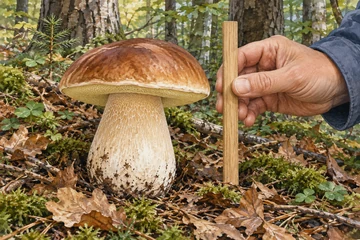
The boletes examined here have tubes beneath the cap opening through pores. This structure differs from gills and folds. It provides an initial observation group, but neither names the species nor settles its dietary use.
Culinary porcini
Boletus edulis, B. aereus, B. reticulatus and B. pinophilus are common reference names for European porcini. Their identification uses several cap, stem and underside characters. A thick stem or brown colour is not enough to establish one of these identities.
Other genera and other statuses
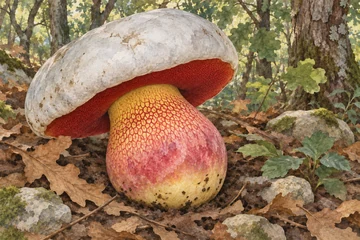
The devil's bolete is currently named Rubroboletus satanas. It illustrates that a tube-bearing form can belong to a toxic taxon. Colours and blue staining are characters to interpret in combination, not a universal edibility code.
Common name and current name
Retain useful historical synonyms, particularly former Boletus species that have been reclassified. A modern account must link the old name to the relevant concept without confusing a genus change with a safety change. For a harvest, batch inspection follows examination, regardless of the vocabulary used for the basket.
Related guides and articles
Show 20 more articles

- Cep soil: what the map and terrain say separately
- Porcini season: a calendar for several species
- Trees associated with porcini: proximity, stand and evidence
- Porcini nutrition: reading the Ciqual 2025 values
- Recognising porcini
- Slimy porcini: wet surface or deterioration?
- Growing porcini: root association and production are two aims
- Porcini prices: species, provenance and cost after sorting
- Penny bun
- A yellow cep
- Freezing ceps: prepare portions that are easy to cook
- Storing ceps: track the condition of stem, cap and tubes
- Must ceps be peeled? Cleaning without removing the whole cuticle
- Cep powder: start with an identified dried product
- Drying ceps: prepare inspectable slices
- Cleaning ceps: examine the interior too
- Cooking fresh ceps: distinguish sorting, cutting and browning
- Removing cep tubes: a choice of condition and texture
- Raw ceps: gastronomic reputation and health recommendation
- An old cep: flesh condition matters more than size
 Sources and review