Must ceps be peeled? Cleaning without removing the whole cuticle
Peeling a cep and removing its tubes are different actions. Useful preparation first removes soil and spoiled parts from an identified specimen.
Distinguish the structures
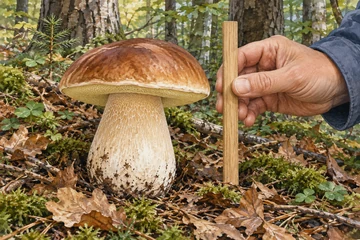
The cap has an outer surface, while the tubes form its lower part. The flesh lies between these structures. The description of Boletus edulis allows them to be named correctly; a spongy layer beneath the cap is not a skin to peel.
Clean what is accessible
Remove soil from the base, leaves and particles on the cap. Use a soft brush or water cleaning according to the dirt, then drain. Purdue describes cleaning food mushrooms; this action targets debris, not the toxicity of a misidentified species.
Remove according to condition
A damaged area is addressed during sorting. No institutional justification is provided here for systematically removing the whole cap surface from every sound cep. For your recipe, then choose pieces whose texture suits you. Open stem and cap to examine the inside.
Then prepare promptly
The FSVO recommends prompt preparation and cooking of fresh mushrooms. Peeling is not a detoxification method. Keep the identified batch separate and do not mix fragments of an unidentified specimen with pieces already ready for the pan.
Related guides and articles
Show 20 more articles

- Cep soil: what the map and terrain say separately
- Porcini season: a calendar for several species
- Trees associated with porcini: proximity, stand and evidence
- Porcini nutrition: reading the Ciqual 2025 values
- Recognising porcini
- Porcini and boletes: a subset, not two opposing groups
- Slimy porcini: wet surface or deterioration?
- Growing porcini: root association and production are two aims
- Porcini prices: species, provenance and cost after sorting
- Penny bun
- A yellow cep
- Freezing ceps: prepare portions that are easy to cook
- Storing ceps: track the condition of stem, cap and tubes
- Cep powder: start with an identified dried product
- Drying ceps: prepare inspectable slices
- Cleaning ceps: examine the interior too
- Cooking fresh ceps: distinguish sorting, cutting and browning
- Removing cep tubes: a choice of condition and texture
- Raw ceps: gastronomic reputation and health recommendation
- An old cep: flesh condition matters more than size
 Sources and review