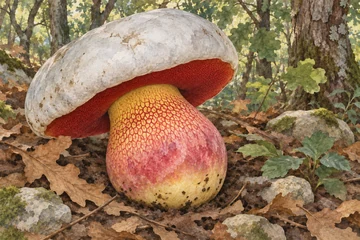
How long does a cep take to grow? Defining the right measurement
A cep discovered between two visits has not necessarily grown throughout that interval. Distinguish Boletus edulis development from the moment you notice it.
The name cep must be specified
Several species bear this name. This dossier uses Boletus edulis as the descriptive reference without assigning the same rate to all ceps. Identity and habitat must accompany a growth measurement.
Detection and growth
A small fruiting body hidden in litter may be missed on the first visit. Discovery date is therefore not necessarily emergence date. Individual photographic monitoring with a scale allows visible enlargement to be measured without reconstructing a fictitious age.
Weather and variation
Fungal phenology responds to variable climate conditions. A study of fruiting dates nevertheless does not provide a universal number of days a cep needs. No generalisable experimental growth rate is established in this dossier’s selected sources.
Building a useful observation
Follow an individual in place with date, dimensions, cap and stem condition, support and photographs. Separate enlargement from deterioration. Compare several individuals and episodes before interpreting development; large size alone proves neither age nor food quality.
Related guides and articles
Show 20 more articles

- Porcini season: a calendar for several species
- Trees associated with porcini: proximity, stand and evidence
- Porcini nutrition: reading the Ciqual 2025 values
- Recognising porcini
- Porcini and boletes: a subset, not two opposing groups
- Slimy porcini: wet surface or deterioration?
- Growing porcini: root association and production are two aims
- Porcini prices: species, provenance and cost after sorting
- Penny bun
- A yellow cep
- Freezing ceps: prepare portions that are easy to cook
- Storing ceps: track the condition of stem, cap and tubes
- Must ceps be peeled? Cleaning without removing the whole cuticle
- Cep powder: start with an identified dried product
- Drying ceps: prepare inspectable slices
- Cleaning ceps: examine the interior too
- Cooking fresh ceps: distinguish sorting, cutting and browning
- Removing cep tubes: a choice of condition and texture
- Raw ceps: gastronomic reputation and health recommendation
- An old cep: flesh condition matters more than size
 Sources and review