Mountain ceps: describing the forest belt before elevation
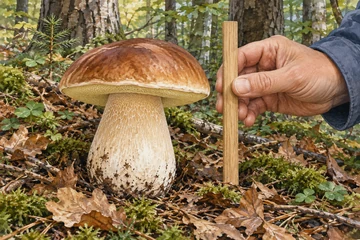
In Europe, Boletus edulis occupies forests and wooded pastures, notably under spruce, beech and fir. Observations mainly below 1 600 m do not set an elevation limit.
A number does not replace habitat
Two sites at the same elevation can have different trees, aspect and support. The forest belt helps define context but does not demonstrate a taxon’s presence. Retain the observed cep’s identity rather than a simple “bolete” point.
Trees and their roots
Ceps involved in ectomycorrhizal associations need a compatible root system. INRAE describes how this symbiosis works. Proximity to spruce or beech alone does not assign the specimen’s exact partner.
Read the slope’s history
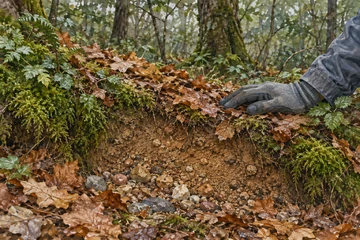
Describe recent snow, apparent moisture, aspect and access condition. These observations are local; a distant weather station does not measure every micro-site. A later date at elevation may be a hypothesis to test, not a promise of extending the harvest.
Compare properly
Follow several sectors with similar durations and record absences. A series on the same taxon then allows dates and habitats to be compared. European studies show changing phenology: they do not provide an optimal elevation valid in the Alps, Pyrenees and every massif.
Related guides and articles
Show 20 more articles

- Porcini season: a calendar for several species
- Trees associated with porcini: proximity, stand and evidence
- Porcini nutrition: reading the Ciqual 2025 values
- Recognising porcini
- Porcini and boletes: a subset, not two opposing groups
- Slimy porcini: wet surface or deterioration?
- Growing porcini: root association and production are two aims
- Porcini prices: species, provenance and cost after sorting
- Penny bun
- A yellow cep
- Freezing ceps: prepare portions that are easy to cook
- Storing ceps: track the condition of stem, cap and tubes
- Must ceps be peeled? Cleaning without removing the whole cuticle
- Cep powder: start with an identified dried product
- Drying ceps: prepare inspectable slices
- Cleaning ceps: examine the interior too
- Cooking fresh ceps: distinguish sorting, cutting and browning
- Removing cep tubes: a choice of condition and texture
- Raw ceps: gastronomic reputation and health recommendation
- An old cep: flesh condition matters more than size
 Sources and review