Trees associated with porcini: proximity, stand and evidence
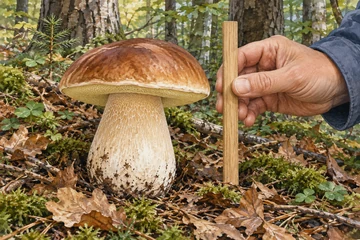
The penny bun is associated with spruces, beeches and firs, and more rarely other trees. Examine both broadleaf and conifer stands.
The trees listed
MycoDB describes Boletus edulis under Picea, Fagus and Abies, in forests and wooded pastures. This list is not exclusive: the sheet also mentions other trees more rarely. Both broadleaf woodland and a conifer stand may therefore match this habitat.
Why trees matter
INRAE describes ectomycorrhiza as an association between roots and hyphae, with exchanges of resources between partners. For this porcini species, the stand is part of the habitat description alongside substrate and date. Observing trees helps choose forests to compare.
An identified porcini
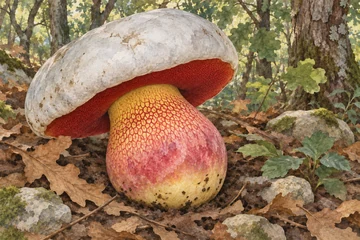
The name porcini covers several European culinary species. The information in this dossier concerns Boletus edulis: it is not automatically transferred to B. aereus, B. reticulatus or B. pinophilus. Keep views of the cap, pores and stem with the name actually determined.
Your field record
Record dominant trees, identifiable young trees, substrate and date; a photograph of the stand complements that of the specimen. The observed community is a habitat clue, whereas attributing the exact root partner needs additional evidence. Repeat visits in comparable areas and also keep visits without fruiting.
Related guides and articles
Show 20 more articles

- Cep soil: what the map and terrain say separately
- Porcini season: a calendar for several species
- Porcini nutrition: reading the Ciqual 2025 values
- Recognising porcini
- Porcini and boletes: a subset, not two opposing groups
- Slimy porcini: wet surface or deterioration?
- Growing porcini: root association and production are two aims
- Porcini prices: species, provenance and cost after sorting
- Penny bun
- A yellow cep
- Freezing ceps: prepare portions that are easy to cook
- Storing ceps: track the condition of stem, cap and tubes
- Must ceps be peeled? Cleaning without removing the whole cuticle
- Cep powder: start with an identified dried product
- Drying ceps: prepare inspectable slices
- Cleaning ceps: examine the interior too
- Cooking fresh ceps: distinguish sorting, cutting and browning
- Removing cep tubes: a choice of condition and texture
- Raw ceps: gastronomic reputation and health recommendation
- An old cep: flesh condition matters more than size
 Sources and review