Recognising porcini: compare four species rather than one brown bolete
The four common porcini are compared through cap, pores, reticulation and flesh; the term bolete includes many other species.
Underside before name
A porcini has tubes ending in pores. The four species addressed here represent neither all boletes nor all white-fleshed fungi. The underside must be visible.
Four combinations of characters
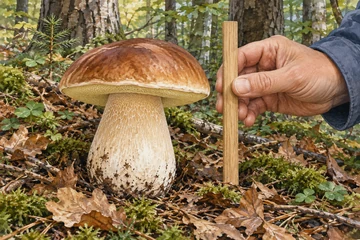
The penny bun has a brown cap with an often paler margin and apical reticulation; the dark cep has dark brown shades; the pine bolete, reddish-brown shades; the summer bolete, generally more extensive reticulation and a drier surface. Read these tendencies together with pores and flesh, rather than as four colour swatches.
Exclude look-alikes separately
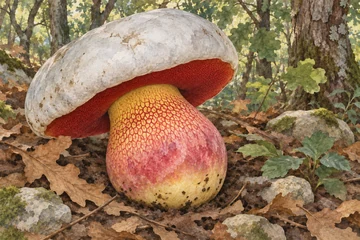
The bitter bolete develops pinkish pores and dark reticulation. Red-pored and blue-staining boletes require their own dossiers. Compare undersides and stems of specimens at the same stage.
Related guides and articles
Show 20 more articles

- Cep soil: what the map and terrain say separately
- Porcini season: a calendar for several species
- Trees associated with porcini: proximity, stand and evidence
- Porcini nutrition: reading the Ciqual 2025 values
- Porcini and boletes: a subset, not two opposing groups
- Slimy porcini: wet surface or deterioration?
- Growing porcini: root association and production are two aims
- Porcini prices: species, provenance and cost after sorting
- Penny bun
- A yellow cep
- Freezing ceps: prepare portions that are easy to cook
- Storing ceps: track the condition of stem, cap and tubes
- Must ceps be peeled? Cleaning without removing the whole cuticle
- Cep powder: start with an identified dried product
- Drying ceps: prepare inspectable slices
- Cleaning ceps: examine the interior too
- Cooking fresh ceps: distinguish sorting, cutting and browning
- Removing cep tubes: a choice of condition and texture
- Raw ceps: gastronomic reputation and health recommendation
- An old cep: flesh condition matters more than size
 Sources and review