8 guides
Map context
Read the conditions
A condition matters only in context. Combine several signals and verify them on the ground instead of treating one indicator as a forecast of mushrooms.
9 min readRead the guide
Landscape reading
Combine weather history, terrain and visible habitat so that each map signal becomes a question to verify in the field, not a prediction to trust blindly.
8 guides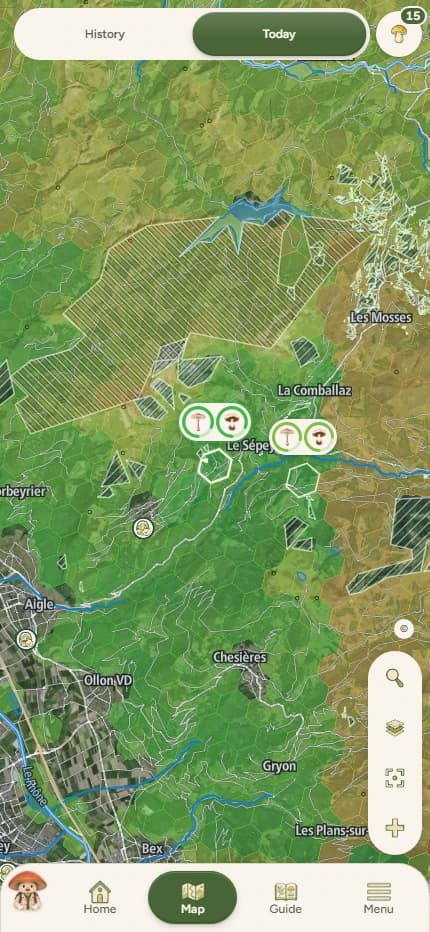
Map context
A condition matters only in context. Combine several signals and verify them on the ground instead of treating one indicator as a forecast of mushrooms.
Choosing a sector
Look for a readable landscape rather than secret coordinates, then compare habitats, access and conditions while protecting sensitive places.
Weather interpretation
Rain can change local conditions, but its effect depends on what came before, where it fell and how the habitat retains or loses moisture.
Habitat literacy
Habitat gives an observation context, not a species name. Learn to describe visible forest features without filling gaps with assumptions.
One factor among several
A single temperature describes neither an organism nor the soil. Trends and microhabitats matter more than a number presented as universal.
From data to woodland
A moisture indicator describes an area and a model. It must be checked against cover, litter and local differences without damaging the ground.
Habitat relationships
Fungi have varied relationships with trees and wood. Visible proximity is not enough to establish a relationship or an identification.
Reading gradients
Elevation and relief change context, weather and walking effort. They organise a comparison but do not determine a species.
The map is free