Contents
 Contents
A safe method for comparing mushroom lookalikes
A good comparison is designed to disprove a favourite hypothesis, not simply collect features that make two mushrooms seem similar.
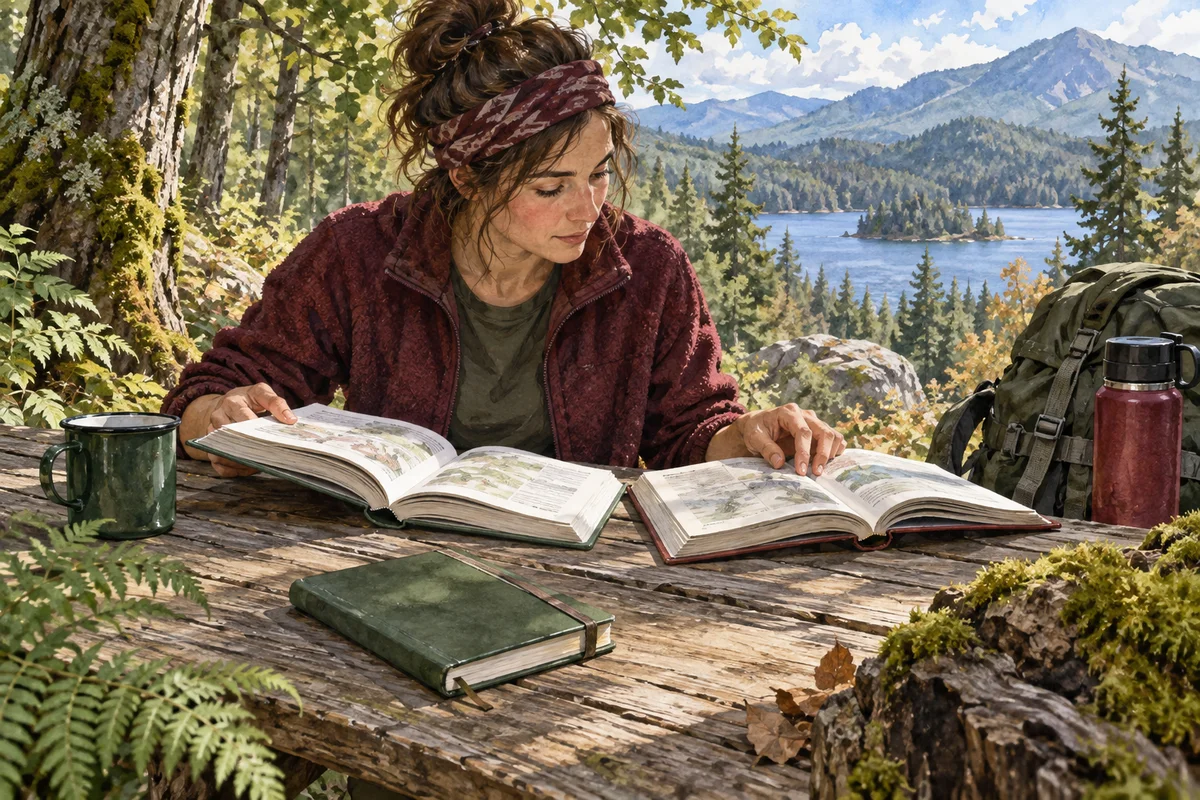
Define the comparison before choosing
Start with a neutral description and select lookalikes from authoritative sources that match the broad structural group and context. Do not compare only with the species you hope to find. Build a simple table covering cap, underside, stem, base, growth pattern, substrate and any other documented diagnostic character relevant to that group. Leave cells blank when the feature was not observed. A blank cell is safer than an invented match, because it shows exactly why the comparison cannot yet support a conclusion.
- Describe the specimen before opening a guide.
- Include dangerous documented lookalikes where relevant.
- Compare the same character across every candidate.
- Mark missing evidence rather than guessing.
 Describe the specimen before opening a guide.
Give contradictions more weight
A striking resemblance may reflect a common colour or silhouette, while a less obvious contradiction can rule out the hoped-for species. Ask which features must be present, which may vary and which are incompatible according to reliable documentation. Do not explain away a mismatch as age, weather or damage unless the source supports that possibility. The goal is not to win an argument for one name. It is to decide whether the evidence is complete enough to justify any name at all.
Control the quality of the specimen
Very young, old, damaged, frozen, dried or incomplete material may hide the characters needed for a safe comparison. Nearby specimens can help document stages only when you have good reason to treat them as the same kind, and each should still be photographed separately. Do not combine a cap from one individual with a stem from another in your notes.
End the comparison at the correct limit
When a decisive character is absent or conflicting, finish with unidentified and exclude the material from consumption. VAPKO must examine complete specimens before any food decision. A suspected Swiss exposure belongs to Tox Info Suisse on 145, while immediate danger requires 144. Do not provoke vomiting. Preserve the comparison notes, photographs, raw material and meal remains for specialist review.
Sources and review

Related guides
Field photography

Photograph mushrooms
A useful identification series shows context and structure. It is not a single portrait of the cap and never replaces examination of the specimen.
Poisoning prevention

Toxicity and safety
Toxicity cannot be seen through a universal sign or neutralised by confidence. Prevention depends on reliable control and fast action when exposure is suspected.
Identification method
Observe and identify
A familiar colour or cap shape is only a starting impression. Responsible identification requires several compatible characters from a complete specimen.