Contents
 Contents
Host trees and mushrooms: observing relationships without shortcuts
Fungi have varied relationships with trees and wood. Visible proximity is not enough to establish a relationship or an identification.
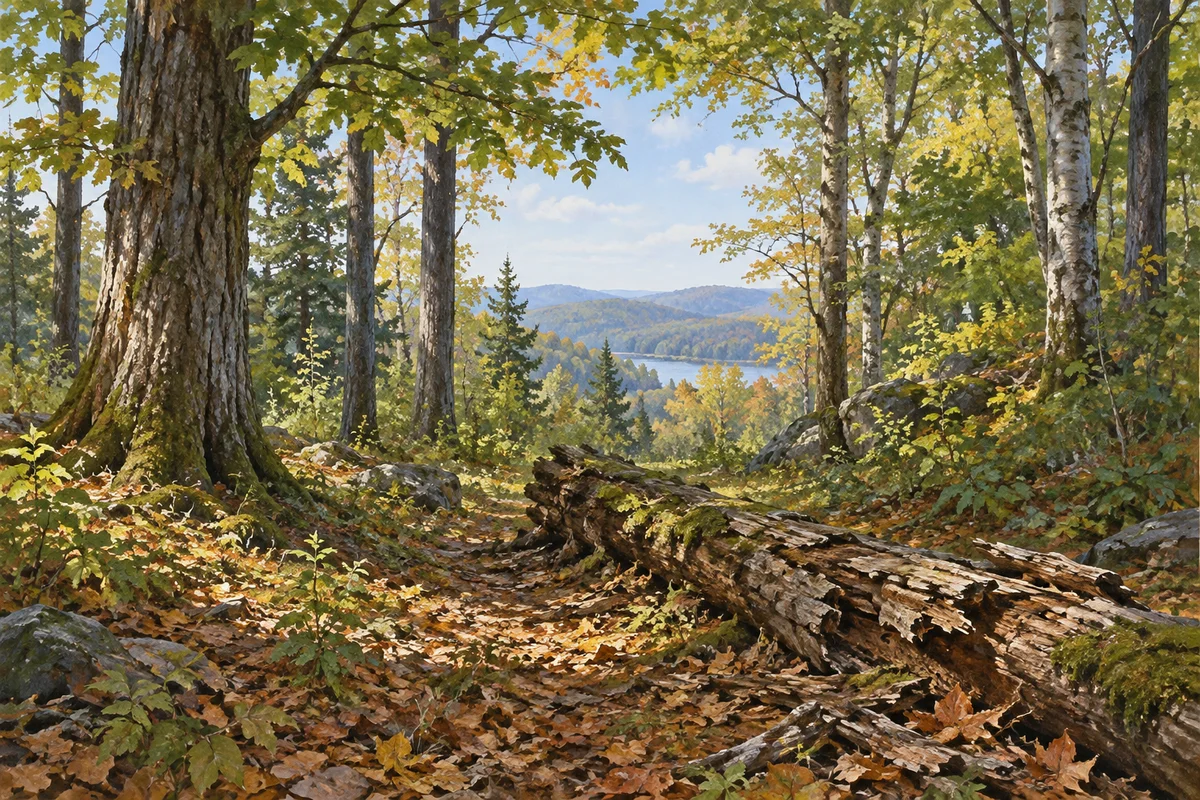
Understand several kinds of relationship
Some fungi associate with trees, while others decompose wood or use other resources. These ecological roles cannot be inferred from proximity alone. Underground networks and the origin of a piece of wood are not always visible. Describe the scene before assigning a precise relationship.
Identify the tree with equal care
An error about the tree can direct the entire search the wrong way. Observe leaves or needles, bark, overall form and several individuals when possible, then leave the taxon unknown when features are missing. This restraint is especially important in winter or mixed woodland.
Document the full context
Photograph the specimen, its immediate support, the ground, visible wood and a wider view of the canopy. Record whether it appears terrestrial or linked to wood without claiming more than the view allows. SwissFungi data and validated guides can then help compare a documented context.
- Photograph several tree features.
- Record the immediate support.
- Leave uncertain taxa unknown.
- Do not infer a species from proximity alone.
 Photograph several tree features.
Avoid the host-tree shortcut
An expected tree does not identify a mushroom, and failure to recognise a tree does not automatically exclude a hypothesis. Other trees may have been missed, roots can extend away from trunks and wood may be buried. Treat the tree as one feature within a complete set. A wider photograph may reveal a mixed stand, but still proves no underground link. Record the apparent distance too.
Sources and review

Related guides
Habitat literacy

Forest habitats
Habitat gives an observation context, not a species name. Learn to describe visible forest features without filling gaps with assumptions.
Recording observations

Describe an observation
A strong observation distinguishes what you saw from what you inferred, so that another person can understand the evidence later.
Reading gradients
Elevation and relief
Elevation and relief change context, weather and walking effort. They organise a comparison but do not determine a species.