Contents
 Contents
How to read forest habitats for mushroom observation
Habitat gives an observation context, not a species name. Learn to describe visible forest features without filling gaps with assumptions.
Start with what is directly visible
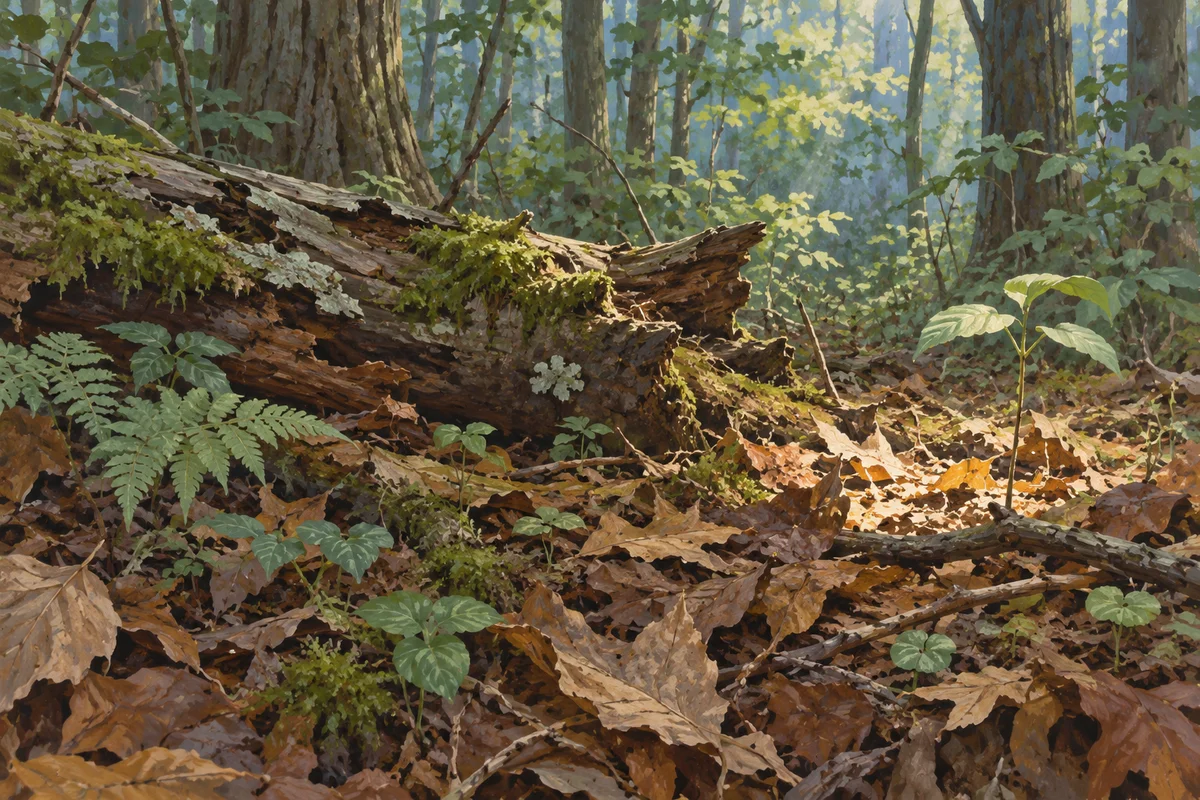
Describe the setting before assigning an ecological label. Note whether the specimen is on soil, litter or wood, whether the canopy appears open or closed, and which nearby trees you can identify with confidence. Record uncertainty rather than guessing. Habitat information can be valuable for later identification and distribution records, but it cannot replace the specimen's own characters. A precise, modest description travels better than a confident statement about soil, host or forest type that was never actually verified.
Read the forest as a mosaic
A mapped forest category may contain edges, clearings, wet hollows, managed stands, dead wood and changes in ground cover. Walk slowly enough to notice these transitions. They help explain why observations can differ over short distances without proving that a certain species belongs in either place. Use MycoRadar to choose a varied route, then let the ground refine the category. Do not generalise from the view at the car park or from one attractive photograph of the forest.
- Record substrate without moving more material than needed.
- Name nearby trees only when you can identify them reliably.
- Photograph the wider setting as well as the specimen.
- Mark uncertain habitat details as unknown.
 Record substrate without moving more material than needed.
Respect ecological function
Fungi contribute to forest ecosystems through diverse relationships and decomposition processes, while the visible mushroom is only a temporary structure. This is a reason to minimise disturbance, not a shortcut for identifying what you see. Avoid unnecessary digging, trampling or removal, especially when an observation can be documented in place. Leave decaying wood and surrounding litter as you found them. A responsible field method recognises that the site has ecological value beyond the specimen that first attracted your attention.
Connect habitat notes to future visits
Store habitat notes with the date, general area and photographs so that later comparisons remain traceable. On a return visit, describe what changed rather than forcing the new scene into the old label. Management, weather, seasonal cover and access can alter what is visible. Distribution atlases provide valuable documented records, but absence from your walk does not prove absence from the landscape. Build a careful personal history and keep each conclusion proportional to what you actually observed.
Sources and review

Related guides
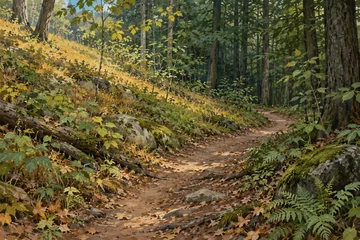
Choosing a sector

Where to look
Look for a readable landscape rather than secret coordinates, then compare habitats, access and conditions while protecting sensitive places.
Recording observations

Describe an observation
A strong observation distinguishes what you saw from what you inferred, so that another person can understand the evidence later.
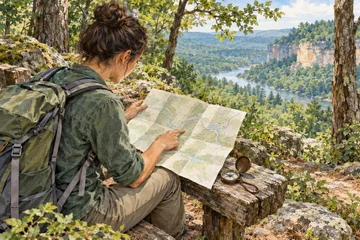
Map literacy

Read the map
The map organises broad signals for comparison. Its job is to help you choose where to observe, not to reveal mushrooms hidden on the ground.