Contents
 Contents
Basket or bag: how should collected mushrooms be carried?
Transport should protect the specimen, maintain separation and preserve the information needed for later inspection, not simply hold the largest quantity.
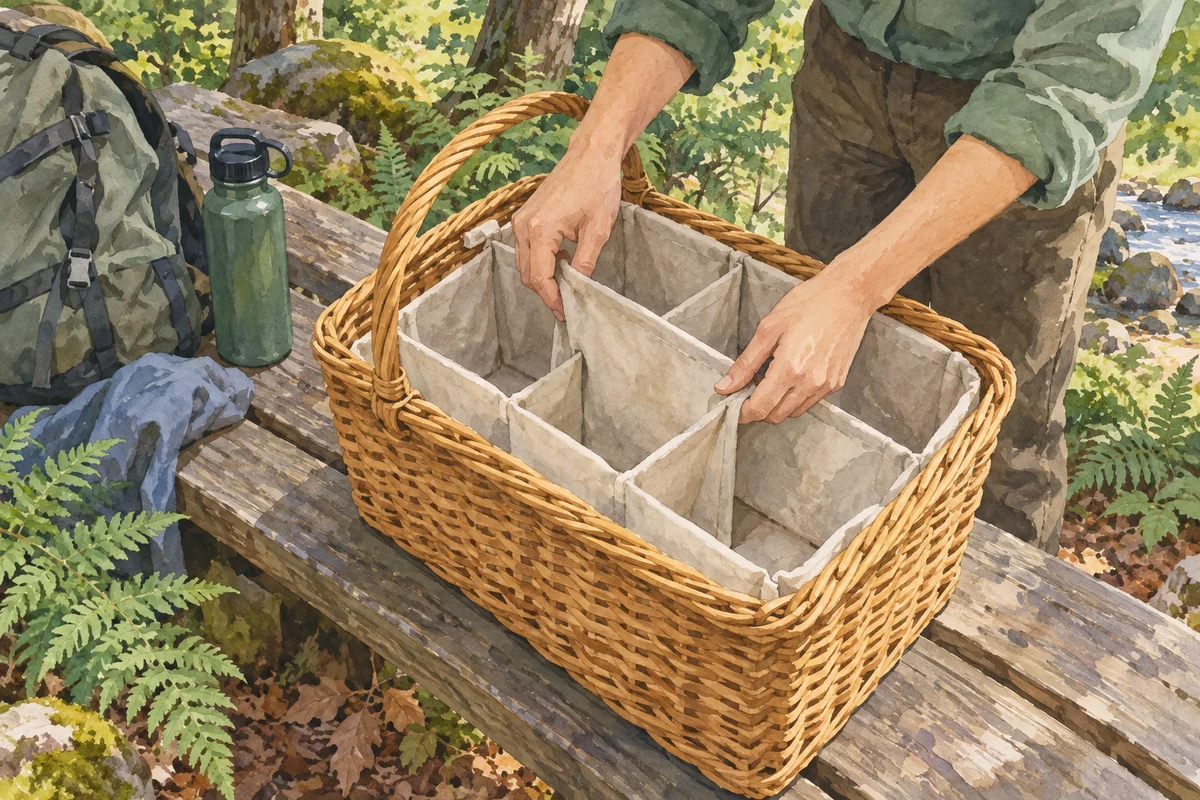
Prefer structure and ventilation
A rigid, ventilated basket or field container helps prevent mushrooms from being crushed into an indistinguishable mixture. It also makes it easier to see and separate the contents during the walk. A closed plastic bag can trap moisture, compress specimens and allow fragments to spread through the lot, so it is poorly suited to unidentified wild mushrooms. Choose a container that is stable on the intended route and never carry more than you can inspect carefully afterward.
Separate every uncertain find
Use distinct compartments or suitable paper packets for unknown specimens, and label them to match the photographs and notes from the site. Keep complete bases and diagnostic surfaces intact when a qualified inspection is planned. Do not place a specimen with a food collection merely because it resembles the others. Fragments can transfer and later make sorting unreliable. A careful transport system preserves uncertainty instead of hiding it, which is essential for both learning and food safety.
- Use a rigid, ventilated container.
- Keep unknown specimens in separate labelled packets.
- Protect complete structures from crushing.
- Link each sample to its field photographs.
 Use a rigid, ventilated container.
Match the container to the route
A basket should not compromise balance, occupy a hand needed for difficult terrain or encourage travel beyond a safe route. For longer or more exposed walks, prioritise hiking safety and observation rather than collection. Keep the load modest and distribute essential gear separately. If the chosen sector requires scrambling, difficult crossings or weather protection that makes a rigid container impractical, change the collecting plan. Finding mushrooms does not reduce the ordinary risks of walking in Swiss terrain.
Sort again before any kitchen decision
Transport quality does not prove identity or edibility. Review every labelled specimen in good light and take the organised collection to VAPKO before preparing food. When illness raises concern about mushroom poisoning, phone 145 in Switzerland. Call 144 for a condition that appears immediately life-threatening, and do not attempt to cause vomiting. Leave the basket divisions intact and retain leftovers, photographs and notes in case the responding professionals request them.
Sources and review

Related guides
Field equipment

Outing equipment
The best kit supports safe movement, complete documentation and careful separation without turning a forest walk into an equipment contest.
Responsible practice

Collect responsibly
A forest visit is shared with wildlife, land managers and other people. Collection should remain lawful, modest, traceable and ecologically attentive.
Post-collection sorting
Clean mushrooms
Cleaning should begin only after identification and separation, because dirt removal can also erase the structures a qualified inspector needs to see.