Contents
 Contents
What equipment should you take on a mushroom outing?
The best kit supports safe movement, complete documentation and careful separation without turning a forest walk into an equipment contest.
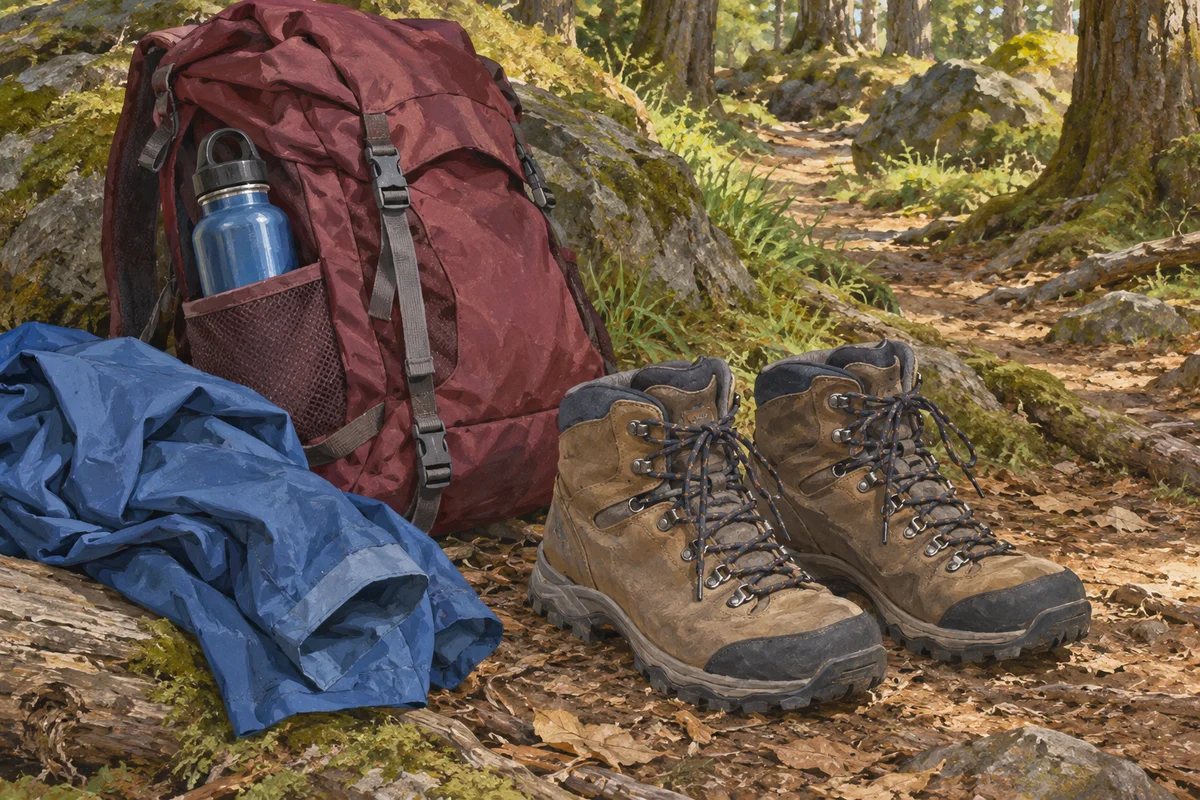
Start with hiking needs
Footwear, weather protection, water, navigation and a charged phone come before specialist mushroom tools. Choose clothing for the forecast and terrain, including changes that could occur during the route. Carry any personal essentials and avoid overloading the group. Equipment cannot compensate for a route that is too difficult or conditions that are unsafe. If the plan requires more capability than the people present have, change the plan rather than adding gear and assuming the risk has disappeared.
- Suitable footwear and layered weather protection.
- Water, navigation and a charged phone.
- Personal medical essentials.
- A compact light source and simple first-aid supplies where appropriate.
 Suitable footwear and layered weather protection.
Build a compact observation kit
A phone or camera, notebook, pencil and unobtrusive size reference are enough for strong documentation. A small mirror can help view an underside without removing a specimen, while a soft brush may reveal features hidden by loose debris. Use tools only when their purpose is clear and local rules allow it. Do not damage multiple specimens to obtain the same view. Careful photographs and honest notes are more valuable than a large kit used without a consistent observation method.
Transport specimens without losing context
If collecting is permitted, use a rigid, ventilated container that protects specimens from crushing and lets you separate uncertain material. Small paper packets or separate compartments can preserve links between a specimen and its notes. Avoid mixing fragments that could later be mistaken for part of another find. Label each sample simply. Transport is not evidence of edibility, and a neat basket does not replace identification. Collect only what you can examine, document and handle responsibly after returning.
- Use rigid, ventilated transport.
- Separate unknown or questionable specimens.
- Keep labels linked to photographs and field notes.
- Leave space so specimens are not crushed together.
Keep technology in a supporting role
Download useful navigation information before entering areas with uncertain reception and protect your phone battery for route needs. Carry a paper fallback when the route warrants it. The most useful tool remains a calm routine: stop, observe the whole context, document what is visible and turn back when conditions no longer match the plan.
Sources and review

Related guides
Before you leave

Outing checklist
A short written checklist prevents route details, local restrictions and observation essentials from disappearing behind the excitement of a forest visit.
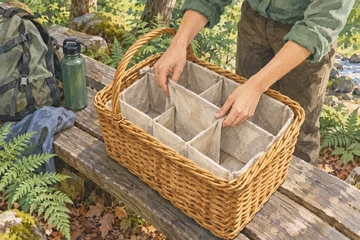
Field transport

Basket or bag
Transport should protect the specimen, maintain separation and preserve the information needed for later inspection, not simply hold the largest quantity.
Field photography

Photograph mushrooms
A useful identification series shows context and structure. It is not a single portrait of the cap and never replaces examination of the specimen.