Contents
 Contents
How to store wild mushrooms safely
Storage slows change but cannot repair poor identification, contamination or deterioration. Only a checked, traceable collection should enter a food-storage routine.
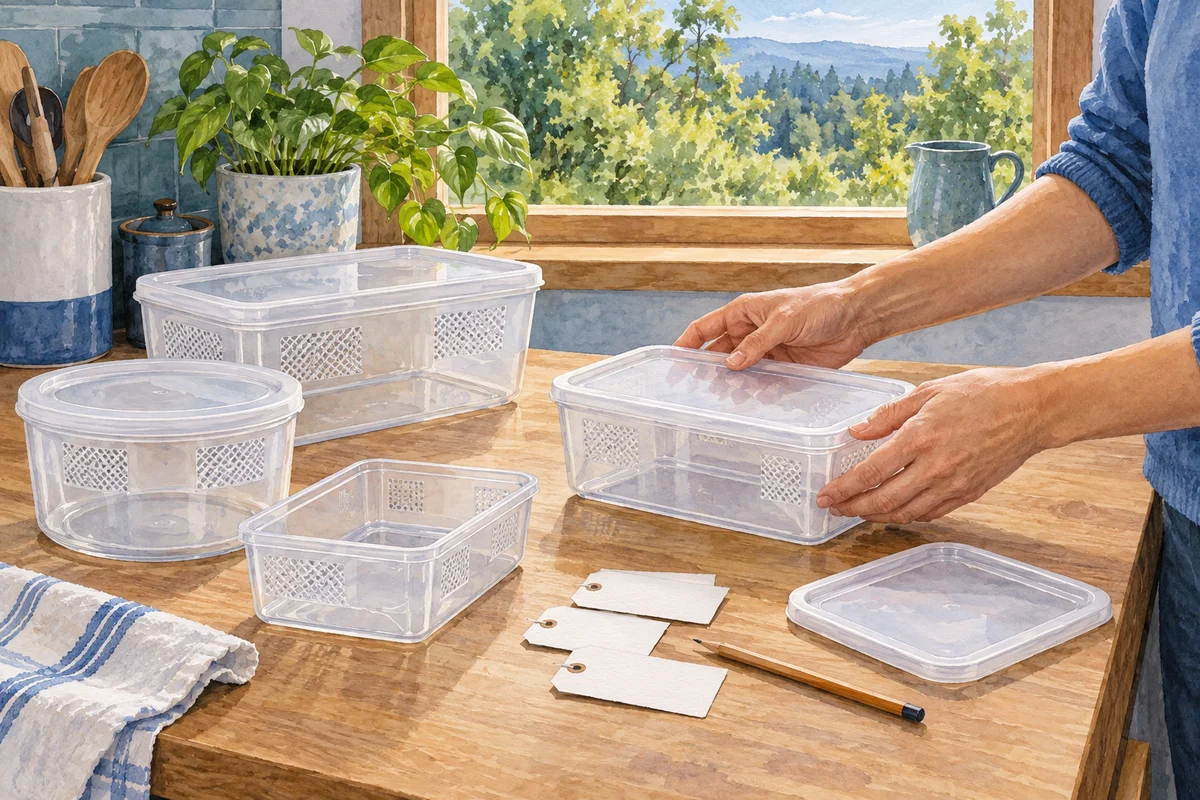
Complete identification before storage
Separate unknown specimens immediately and preserve them complete for inspection instead of cleaning and storing them with a food lot. A container label should identify the collection, date and linked field notes so that material cannot be confused later. Before any consumption, take the complete collection to a VAPKO inspection centre. Storage is not a waiting period that turns probable into safe; unresolved specimens must remain outside the food pathway altogether.
Protect quality without inventing a rule
Follow current official food-safety guidance and any instructions provided by the inspector for the verified species and preparation plan. Use clean food-grade containers, avoid crushing and keep the lot away from unknown specimens or their fragments. Because condition, species and household equipment differ, this guide does not provide a universal storage duration or temperature. If you cannot verify how long a lot has been held or whether suitable conditions were maintained, do not use guesswork to approve it.
- Store only a verified and traceable lot.
- Use clean food-grade containers.
- Keep unknown specimens physically separate.
- Follow current official guidance for the actual material.
 Store only a verified and traceable lot.
Inspect condition again before preparation
A previous control does not prevent later deterioration. Before preparation, review appearance, odour and overall condition without using any one sign as proof of safety. Discard material that is degraded, contaminated, untraceable or otherwise questionable. Do not combine old and new collections under one label. When in doubt, exclude the whole affected portion rather than trimming until it looks acceptable. Safe handling depends on both correct identification and continued suitability from forest to kitchen.
Respond correctly to suspected poisoning
Suspected poisoning from a stored batch should be reported to Tox Info Suisse on 145. If the person's condition threatens life, call 144. Vomiting should not be induced. Isolate the container and its label, keep meal remains and note who ate from the lot and when. An app cannot assess symptoms or certify the contents. The retained packaging and collection history can help professionals reconstruct the exposure after the call has been made.
Sources and review

Related guides
Post-collection sorting
Clean mushrooms
Cleaning should begin only after identification and separation, because dirt removal can also erase the structures a qualified inspector needs to see.
Complete drying guide

How to dry mushrooms
Reliable drying removes moisture from the centre while preserving the identity of every batch. Expert identification and inspection must always happen before slicing.
Kitchen safety
Cook safely
Cooking begins after certain identification and suitable condition have been established. Heat cannot correct an unknown species or a mixed collection.