Contents
 Contents
Summer mushroom outings: heat, storms and woodland cover
Summer can alternate between drought, storms and local cool areas. The latest rainfall alone cannot describe the condition of woodland ground.
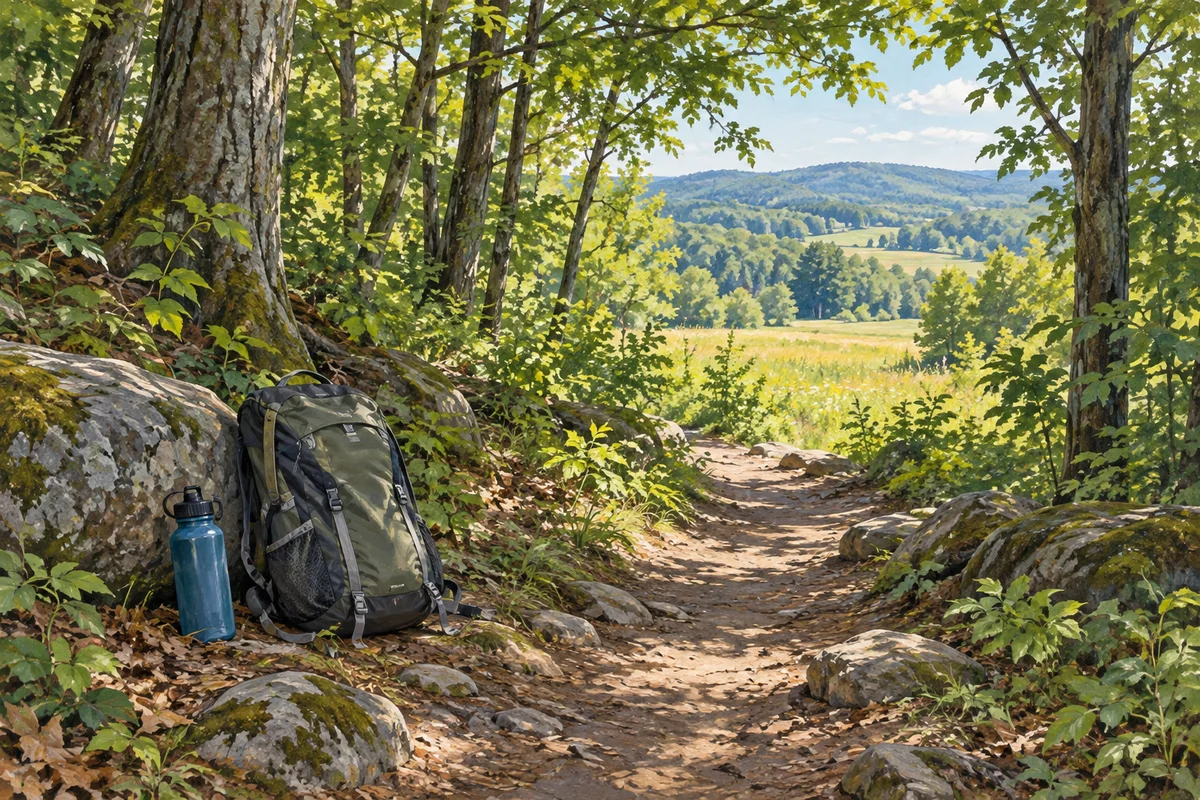
Read the full hot spell
A summer shower may fall on ground that was already dry or on a habitat that retained water. Look at the preceding days, wind, temperature and available moisture indicators instead of the latest rainfall total alone. Heat may dry exposed areas while some cover stays cooler, but neither situation guarantees fruiting.
Look for habitat contrasts
Design a route through shaded portions, changes in cover and accessible relief. Observe visible litter and soil without digging or inventing their composition. A contrast confirmed outside is more useful than a general rule about coolness because every slope, canopy and weather sequence changes the local context.
Manage heat and thunderstorms
Choose suitable hours, carry enough water and monitor thunderstorm alerts. Woodland does not protect against lightning or rapidly rising water. Set a firm return point, avoid depending on mobile coverage and wear clothing that also limits tick exposure in vegetated areas.
- Review several days of weather.
- Carry water and an offline map.
- Monitor thunderstorms.
- Compare exposed and covered ground.
 Review several days of weather.
Compare without rushing to a conclusion
Record dry sectors as carefully as moister ones, and do not keep only productive days. This comparison reduces memory bias. It shows how one summer varies locally without allowing a certain forecast, an identification or a decision about edibility based on conditions alone. A shaded path can still be dry.
Sources and review

Related guides
March to May

Spring outings
Spring brings together thaw, mild spells, returning cold and saturated ground. A useful outing compares areas and accepts strong seasonal variation.
Weather interpretation

After the rain
Rain can change local conditions, but its effect depends on what came before, where it fell and how the habitat retains or loses moisture.
September to November
Autumn outings
Autumn brings more people into woodland, but a season considered favourable remains uneven. Conditions, access and daylight need to be read together.