Contents
 Contents
Spring mushroom outings: reading a season in transition
Spring brings together thaw, mild spells, returning cold and saturated ground. A useful outing compares areas and accepts strong seasonal variation.
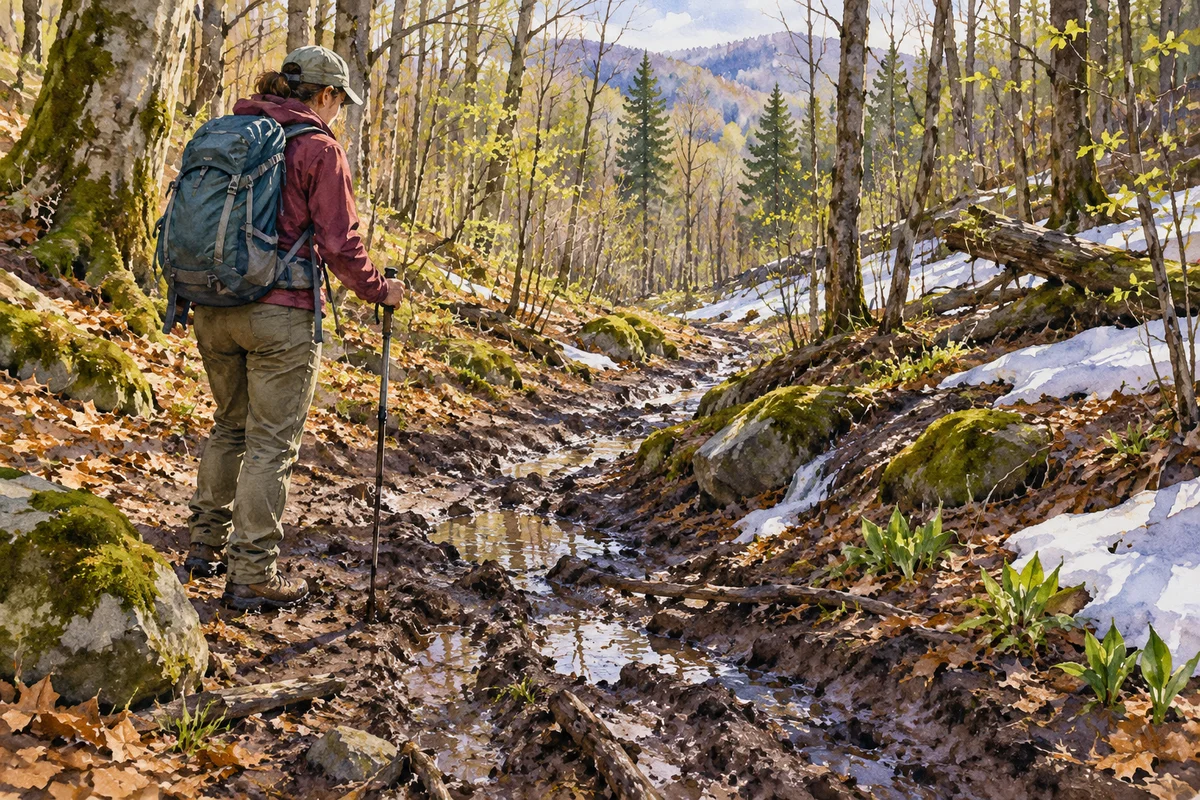
Understand the spring transition
In spring, the calendar may move faster than some habitats. Remaining snow, cold nights, warmer spells, rain and vegetation growth do not progress at the same rate everywhere. A valley, plateau and slope can therefore show different conditions on the same day. Start with a possible outing window, not a date presented as decisive.
Compare areas instead of dates
Compare accessible elevations, exposures and types of cover without automatically linking a species to a signal. Air temperature does not describe the ground by itself, and an area shown as moist on a map confirms no mushroom. The data helps select what deserves a slow check outside.
Prepare a flexible route
Paths may remain muddy, slippery or affected by water even when the air feels mild. Keep a short loop, a return time and an alternative at lower elevation or with easier access. Take covering clothing and consult current Swiss tick guidance before walking through grass and woodland edges.
- Compare several accessible elevations.
- Check mud, remaining snow and access.
- Set a fallback loop.
- Record context without inferring a species.
 Compare several accessible elevations.
Record what the season shows
After the outing, file observations with the date, approximate elevation, cover and visible ground condition. A quiet visit does not prove that the season has not started. It only describes that area at that time. Keep counterexamples so that one successful outing does not become a general spring rule.
Sources and review

Related guides
Timing a visit

Choose when to go
There is no single perfect day. A useful decision combines recent conditions, the place you will visit and a realistic opportunity to observe it well.
Map context

Read the conditions
A condition matters only in context. Combine several signals and verify them on the ground instead of treating one indicator as a forecast of mushrooms.
June to August
Summer outings
Summer can alternate between drought, storms and local cool areas. The latest rainfall alone cannot describe the condition of woodland ground.