Contents
 Contents
Autumn mushroom outings: preparing for the busiest season
Autumn brings more people into woodland, but a season considered favourable remains uneven. Conditions, access and daylight need to be read together.
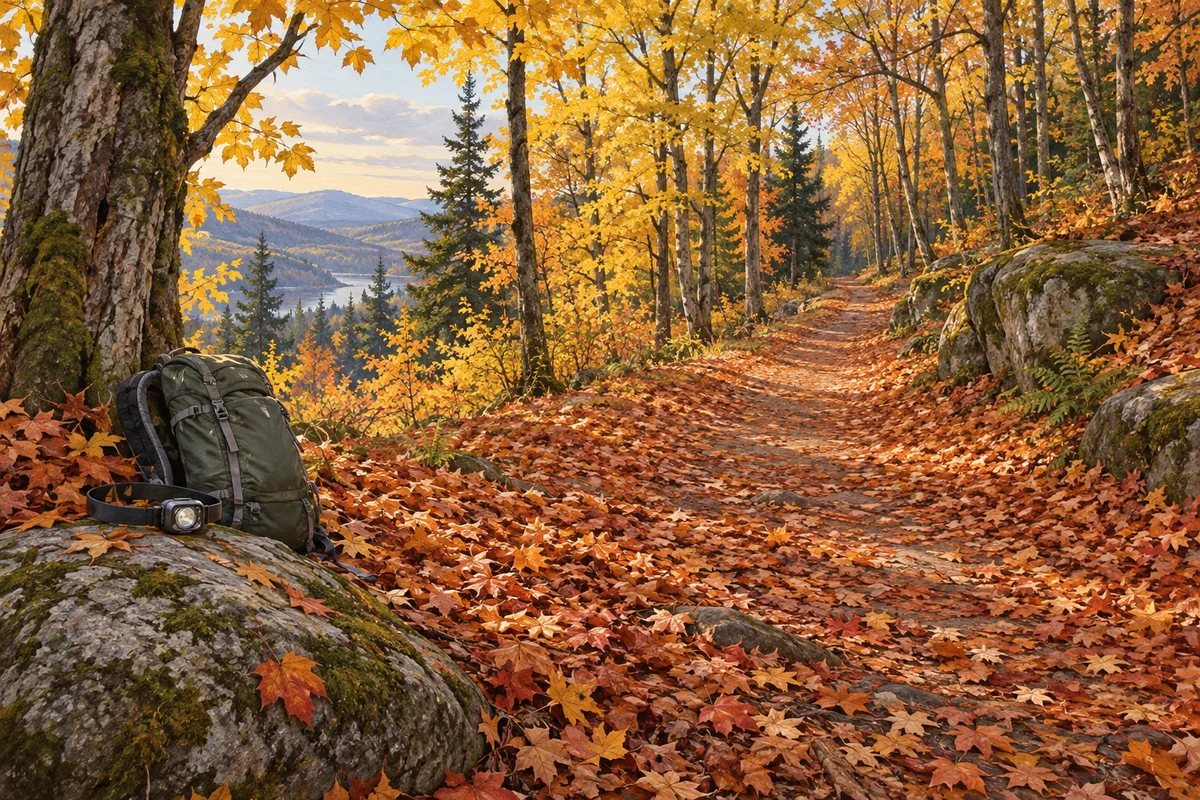
Do not confuse season with certainty
Autumn is associated with mushrooms, but that reputation guarantees nothing in a particular area. Rainfall sequences, cooling, wind, cover and elevation change differently. Compare several places that fit the available walking time and accept that a familiar site may be dry, disturbed or simply different during the visit.
Read fast changes
Daylight shortens, leaves hide the ground and temperature changes may affect access without acting as a universal biological threshold. Read trends and check the terrain. A map helps rank areas, while field observation confirms only the visible condition of the path, litter and canopy at that moment.
Share woodland carefully
Respect protected areas and avoid concentrating off-path pressure. Take an open basket only if a checkable harvest is planned. Keep uncertain specimens separate, retain them whole for inspection and leave anything that is not needed for learning.
- Plan for less daylight.
- Separate uncertain specimens.
- Respect other woodland users.
 Plan for less daylight.
Build an honest autumn record
Record times, context and negative observations rather than reducing autumn to a few successful harvests. Compare outings using the same criteria. One year cannot establish a lasting rule, and an observed location should never become coordinates shared publicly as a promise. Busy paths may also alter the plan.
Sources and review

Related guides
Timing a visit

Choose when to go
There is no single perfect day. A useful decision combines recent conditions, the place you will visit and a realistic opportunity to observe it well.
June to August
Summer outings
Summer can alternate between drought, storms and local cool areas. The latest rainfall alone cannot describe the condition of woodland ground.
December to February
Winter outings
Winter calls for a modest observation goal and a larger safety margin. Apparent cold does not describe every small habitat.