Contents
 Contents
When is the best time to look for mushrooms?
There is no single perfect day. A useful decision combines recent conditions, the place you will visit and a realistic opportunity to observe it well.
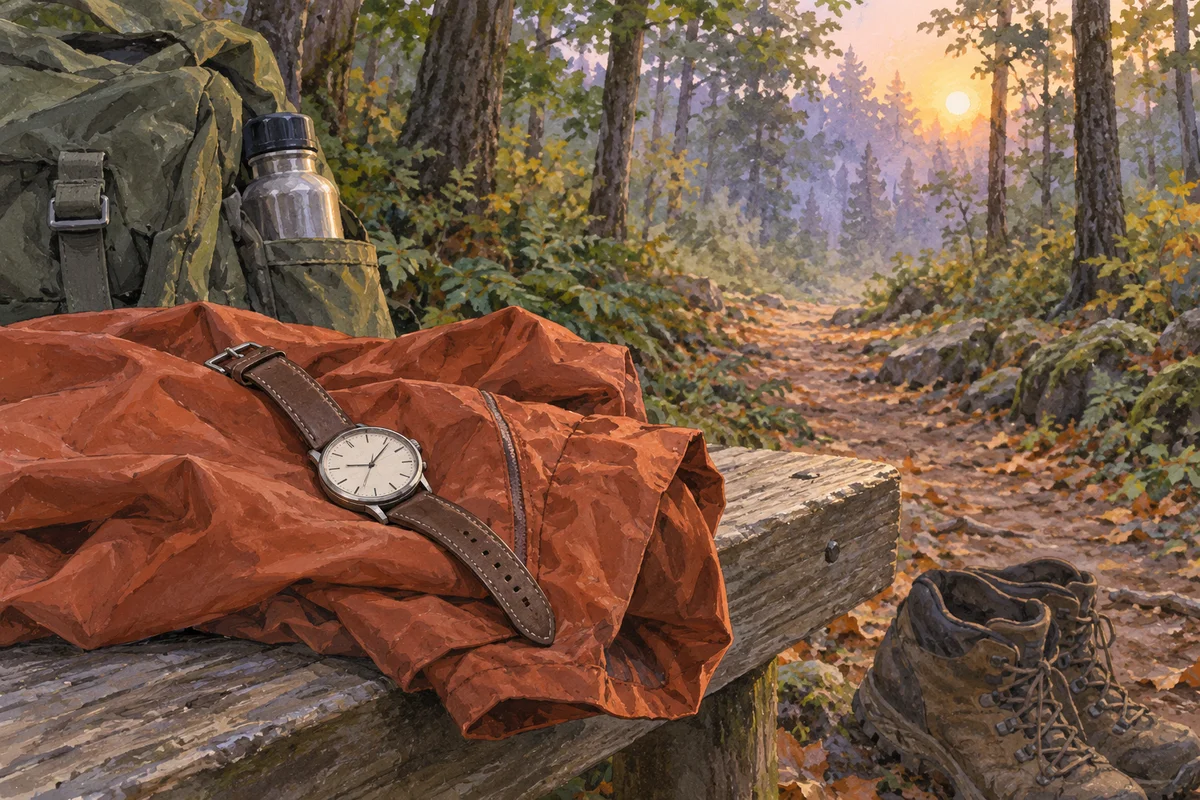
Replace the perfect date with a useful window
Mushroom activity is not controlled by one calendar date or one weather event. Different fungi respond to different ecological contexts, while visible fruiting bodies are only one part of their life cycle. Use season as a broad frame, then examine recent conditions and the habitat you intend to visit. A flexible window and repeat visits are more informative than betting everything on one supposedly perfect morning.
Read recent weather as a sequence
Look beyond today's icon. Recent rain, dry periods, wind, warmth and changes in exposure can shape how a place feels when you arrive, but none of them works as a universal trigger. Radar and soil moisture information offer context at different scales, and local ground conditions may still differ. Compare the sequence with your own field notes. The goal is not to calculate a guaranteed emergence date, but to decide whether a sector deserves a careful visit now or later.
- Review recent conditions, not only today's forecast.
- Compare exposed and sheltered sectors on the map.
- Check whether access and visibility remain suitable.
- Keep a second date available for comparison.
 Review recent conditions, not only today's forecast.
Let habitat change your timing decision
Two nearby places can behave differently because their canopy, slope, soil cover and exposure are not identical. A date that was informative in one woodland does not automatically transfer to another. Use the map to choose contrasting sectors and verify the difference on foot. Record only what you can observe directly, such as a damp litter layer or a dry exposed edge. This produces a grounded history of the place without claiming a biological rule that the available evidence cannot support.
Choose safety over a promising signal
A strong map signal is never a reason to walk in unsafe weather, poor visibility or unsuitable terrain. Check official forecasts, route conditions and local notices before leaving, and revise the outing when circumstances change. If the field visit is still practical, arrive with enough time to observe slowly. If it is not, postpone it. Mushrooms and map scores are uncertain; the risks created by rushing, storms or difficult ground are real and should remain the first planning constraint.
Sources and review

Related guides
Weather interpretation

After the rain
Rain can change local conditions, but its effect depends on what came before, where it fell and how the habitat retains or loses moisture.
Map context
Read the conditions
A condition matters only in context. Combine several signals and verify them on the ground instead of treating one indicator as a forecast of mushrooms.
From screen to forest

Plan with MycoRadar
A good MycoRadar plan connects map interpretation with route safety, local rules and a simple method for checking assumptions on the ground.