Contents
 Contents
How to plan a mushroom outing in Switzerland
A useful outing begins with a route and a question about the landscape, not with a promise that a desired mushroom will be waiting there.
Define the purpose before the destination
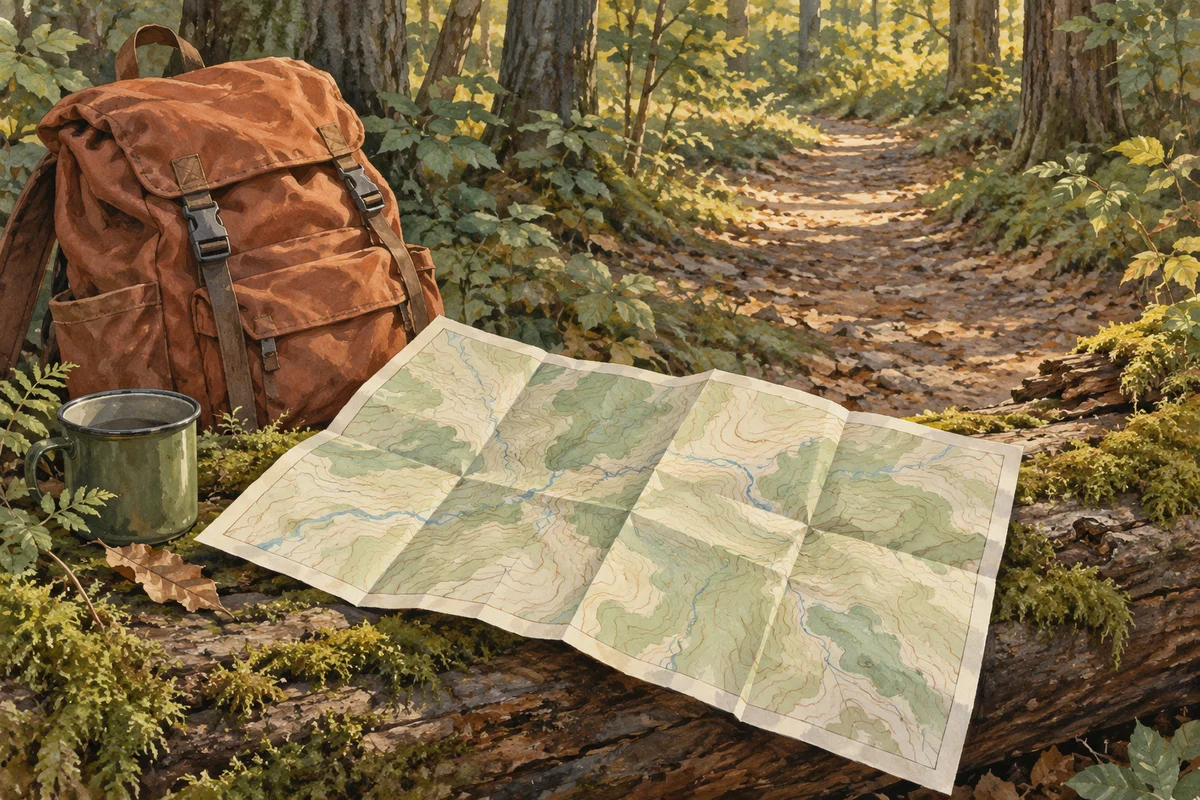
Begin by deciding what you want to learn: compare two slopes, examine a forest edge, document a habitat, or practise complete field photography. This purpose is more reliable than targeting a single hoped-for species. It also makes an outing worthwhile when no fruiting bodies are visible. Treat every map result as a reason to inspect the landscape carefully, not as a collecting promise.
Compare sectors and build a route
Review several nearby sectors instead of following the first attractive score. Compare access, terrain, current weather, daylight, and the variety of habitats your route could cross. Choose a loop that lets you observe more than one micro-environment without requiring difficult navigation. Swiss terrain can change quickly, so match the route to the least experienced person in the group. A smaller, well-read area usually teaches more than a long walk built around one distant map point.
- Compare at least two possible sectors.
- Check access, route difficulty and the current forecast.
- Share the route and expected return with a trusted person.
- Save a nearby alternative that is easier or more sheltered.
 Compare at least two possible sectors.
Prepare for changing field conditions
Pack for the route and forecast rather than for an idealised forest day. Bring water, suitable footwear, weather protection, a charged phone, an offline map where appropriate, and simple observation materials. Leave enough time to return without rushing. If access, weather, visibility, fatigue, forestry work or local instructions make the original plan unsuitable, use the backup option or turn around. Mushroom observation never justifies accepting a hiking risk that you would otherwise avoid.
Review what the landscape taught you
After the outing, compare your plan with what you actually encountered. Record the general habitat, visible moisture, accessibility, date and any unexpected difference from the map. Avoid converting one successful or unsuccessful visit into a universal rule. The value lies in repeated, honest observations that improve future choices. Keep uncertain identifications labelled as uncertain, and separate your route notes from any conclusion about edibility. That discipline makes both your personal archive and your next MycoRadar session more useful.
Sources and review

Related guides
Before you leave

Outing checklist
A short written checklist prevents route details, local restrictions and observation essentials from disappearing behind the excitement of a forest visit.
Field equipment
Outing equipment
The best kit supports safe movement, complete documentation and careful separation without turning a forest walk into an equipment contest.
From screen to forest

Plan with MycoRadar
A good MycoRadar plan connects map interpretation with route safety, local rules and a simple method for checking assumptions on the ground.