Contents
 Contents
Mushroom outing checklist for Switzerland
A short written checklist prevents route details, local restrictions and observation essentials from disappearing behind the excitement of a forest visit.
Confirm the route and conditions
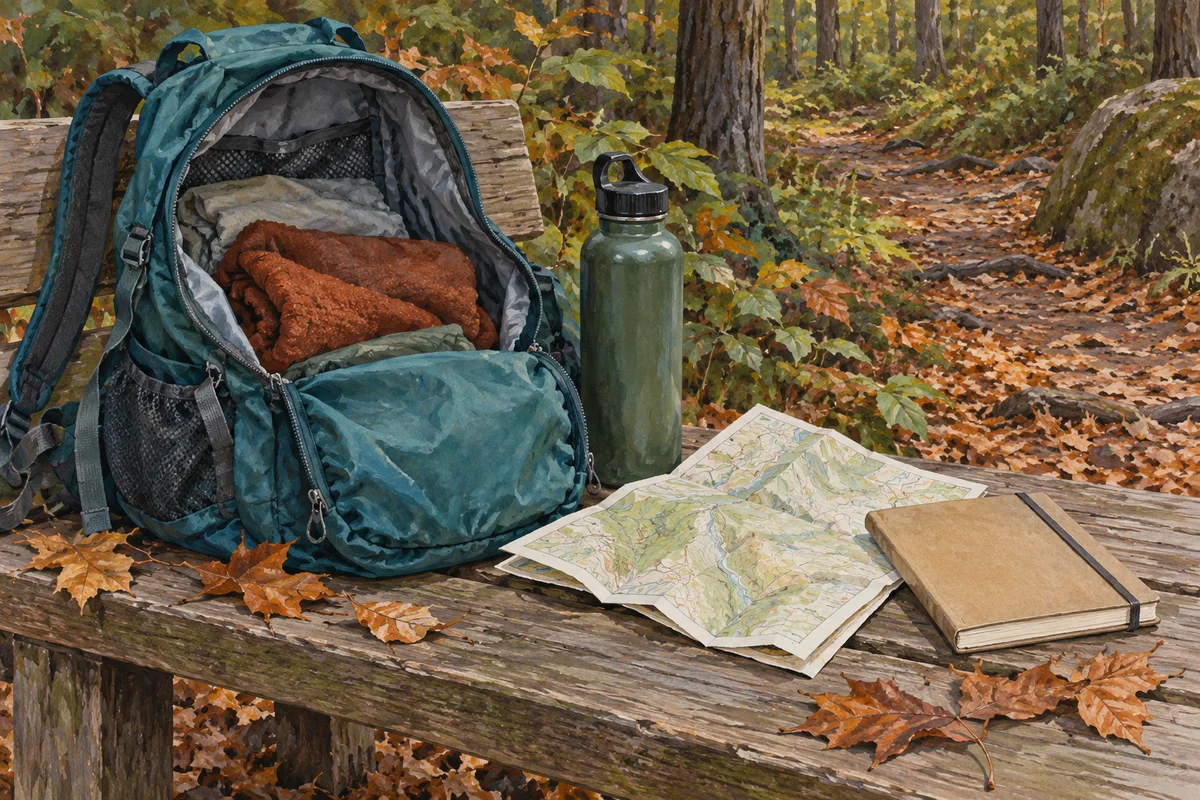
Start with the same essentials you would use for any responsible walk: route, difficulty, forecast, daylight, access and a return plan. Check whether forestry work or protected areas affect the chosen sector. Tell a trusted person where you are going when appropriate. The outing should remain sensible even if no mushroom appears and the map offers no further guidance.
- Check the forecast and access.
- Match the route to the whole group.
- Save navigation information for limited reception.
- Plan a clear return point and backup sector.
 Check the forecast and access.
Pack observation and safety essentials
Bring water, suitable clothing and footwear, a charged phone, navigation support and any personal medication you may need. For documentation, use a camera or phone, a notebook and a scale reference that does not obscure the specimen. If collecting is legal and intended, take rigid, ventilated transport and a way to separate unknown specimens. Equipment should support patient observation, not encourage you to collect more than you can identify, inspect and handle responsibly afterward.
Use a field routine
At the site, pause before searching for a familiar shape. Note the habitat, route position and visible ground conditions. Photograph specimens before moving them, then document the cap, underside, stem, base and growth pattern when safe to do so. Keep uncertain finds separate and clearly marked. Do not taste a wild mushroom as an identification test. A repeatable routine reduces missing information and makes later discussion with a qualified inspector more useful, while still leaving uncertainty visible.
- Record habitat and growth context first.
- Photograph several diagnostic views.
- Keep uncertain specimens separate.
- Leave any unneeded or unsuitable specimen in place.
Close the outing carefully
Before leaving, account for the group, equipment and collected material, and carry out every piece of litter. At home, label photographs and notes while the context is fresh. Review collected specimens in good light and remove anything damaged, mixed or uncertain from any food pathway. If consumption is considered, obtain the appropriate expert control rather than relying on memory or an app. Finish by noting what should change in the route, equipment or observation method next time.
Sources and review

Related guides
Planning method

Plan an outing
A useful outing begins with a route and a question about the landscape, not with a promise that a desired mushroom will be waiting there.
Field equipment
Outing equipment
The best kit supports safe movement, complete documentation and careful separation without turning a forest walk into an equipment contest.
Responsible practice

Collect responsibly
A forest visit is shared with wildlife, land managers and other people. Collection should remain lawful, modest, traceable and ecologically attentive.