Contents
 Contents
How to photograph a mushroom for identification
A useful identification series shows context and structure. It is not a single portrait of the cap and never replaces examination of the specimen.
Begin with the undisturbed context
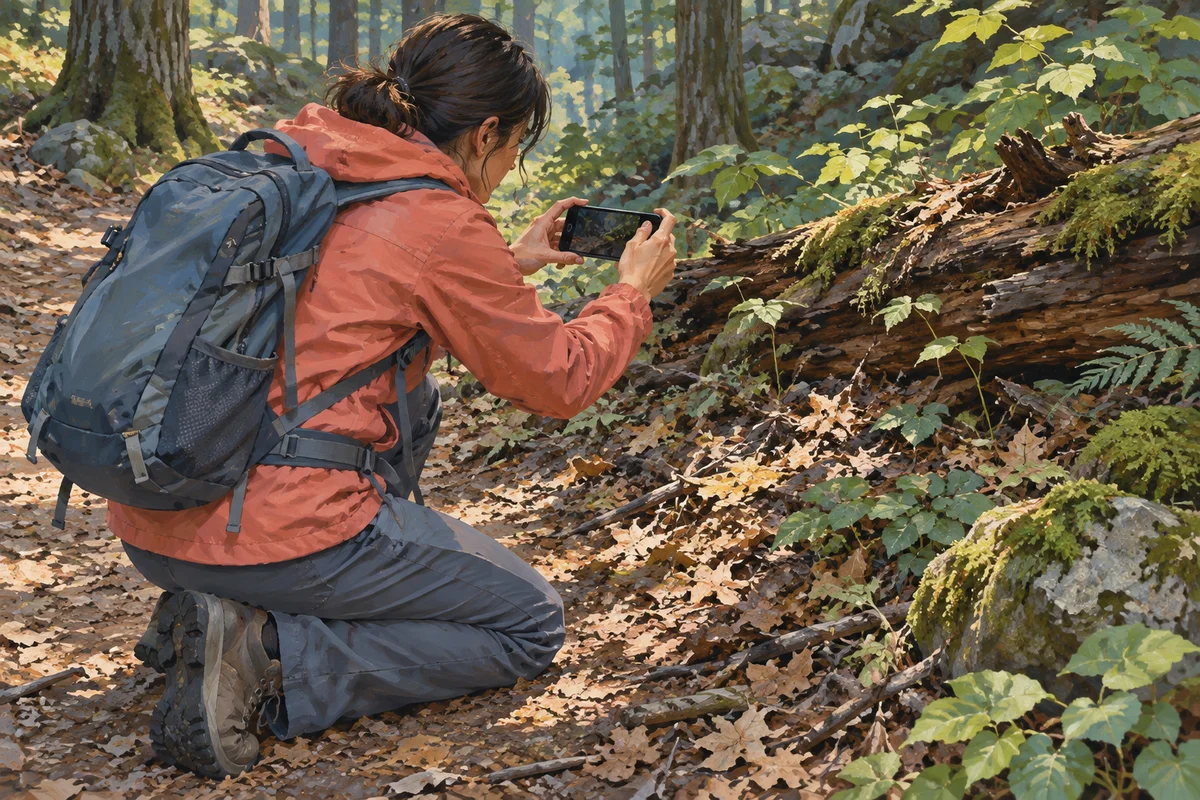
Take the first photograph before touching the specimen. Step back far enough to show whether it grows on soil, litter or wood, and include nearby features that you can describe reliably. Avoid rearranging leaves into a cleaner composition, because the original relationship may matter. Photographing context also reduces the temptation to collect every unknown mushroom. If the subject can be documented adequately in place, leave it there and protect the surrounding habitat from unnecessary trampling.
Build a consistent view sequence
Move from a full profile to the cap, underside, stem and base. Use even natural light where possible, steady the camera and include a simple size reference without covering features. Check focus before leaving the site. If several specimens show different stages, document them separately and do not assume they belong to one species merely because they are close together. A sequence with clear labels is easier to interpret than many unorganised images of the same attractive angle.
- Wide habitat view and growth context.
- Full side profile with a scale reference.
- Sharp underside and stem views.
- Complete base, only when lawful and necessary.
 Wide habitat view and growth context.
Preserve colour and uncertainty
Automatic filters, strong flash and aggressive editing can distort colours or remove surface detail. Keep an original file and make only restrained adjustments for visibility. Add written notes about features the camera does not convey reliably, while avoiding taste tests or unsupported odour claims. Photographs may still omit texture, spore information or internal structures needed for identification.
Know when photographs are insufficient
A photograph can document a specimen but cannot clear it for eating, because decisive characters may remain hidden. Present the actual, complete collection to a VAPKO inspection centre before it enters a recipe. If a diner may have been poisoned, contact Tox Info Suisse at 145 without delay. Use 144 when the signs are life-threatening and never attempt to induce vomiting. Preserve the original image files, uncooked material and meal remnants. Online comments and image recognition do not provide a food-safety control.
Sources and review

Related guides

Recording observations

Describe an observation
A strong observation distinguishes what you saw from what you inferred, so that another person can understand the evidence later.
Identification method
Observe and identify
A familiar colour or cap shape is only a starting impression. Responsible identification requires several compatible characters from a complete specimen.
Lookalike method

Compare lookalikes
A good comparison is designed to disprove a favourite hypothesis, not simply collect features that make two mushrooms seem similar.