Contents
 Contents
Mushroom collecting rules in Switzerland
There is no single local rule that covers every Swiss forest.
Expect local differences
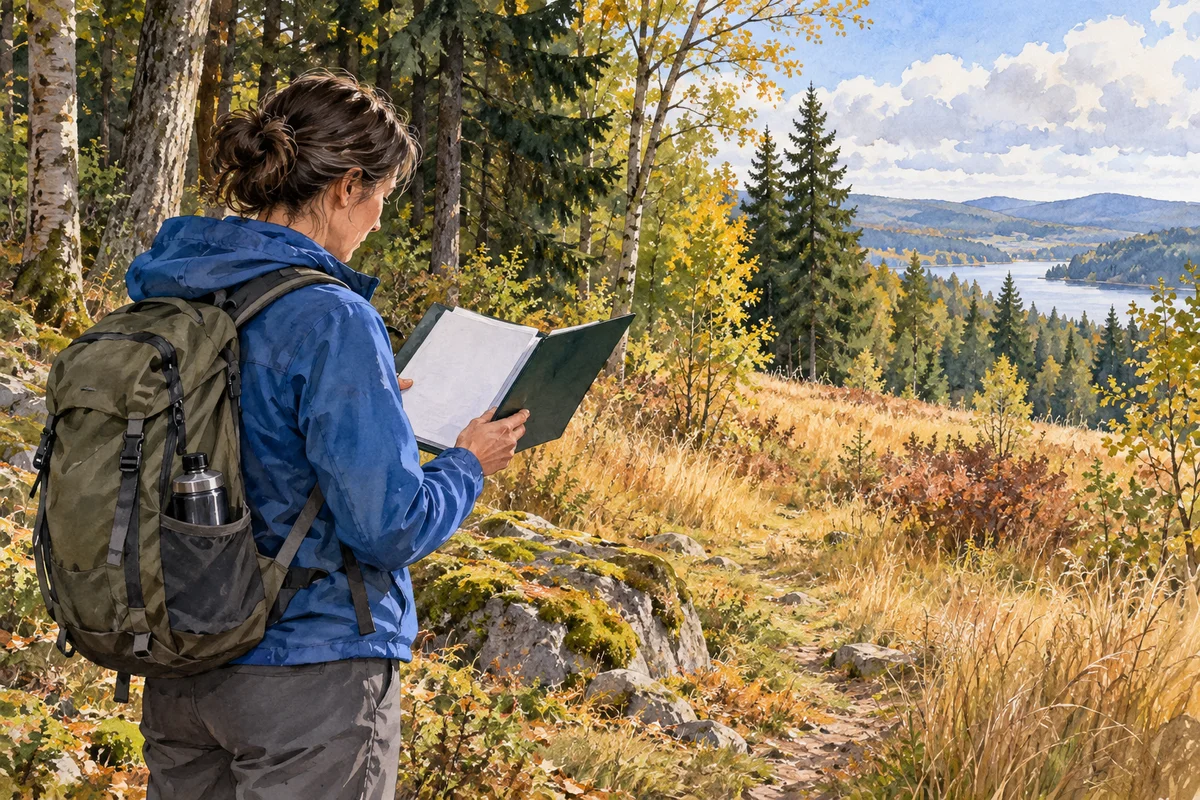
Switzerland combines federal principles with cantonal, municipal and site-specific restrictions. Mushroom collection can therefore be limited by days, quantities, species, protected areas or temporary local measures, and the details may change. VAPKO maintains an overview of cantonal and municipal restrictions. Do not transfer a rule from one valley or last year's outing to another place.
- Identify the canton and municipality for the route.
- Check VAPKO and current official local information.
- Confirm protected-area status and temporary notices.
- Save the source and review date with the plan.
 Identify the canton and municipality for the route.
Treat protected areas separately
A protected area may apply stricter rules than the surrounding canton. The Swiss National Park, for example, prohibits taking natural objects, including mushrooms. Other reserves can have their own boundaries and access conditions. Check an official map and site rules rather than assuming a path or public access permits collection.
Understand access and collection as separate questions
Being allowed to enter a forest does not automatically mean that every collecting practice is allowed there. Conversely, a general collecting rule does not override a closure, private situation, forestry operation or wildlife protection measure affecting access. Follow signs on site. Avoid crossing barriers or creating shortcuts because a map point appears close.
Keep legal compliance separate from edibility
Legal permission answers where collection may occur, not whether a find is safe to eat. Submit every intended food lot, complete and separated, to VAPKO. After a possible poisoning, first call Tox Info Suisse at 145. Route a life-threatening state to 144 and never trigger vomiting. Retain meal remains, photographs and the collection record for the specialists.
Sources and review

Related guides
Responsible practice

Collect responsibly
A forest visit is shared with wildlife, land managers and other people. Collection should remain lawful, modest, traceable and ecologically attentive.
Protected landscapes
Protected areas
Public access and collecting rights can change at a protected boundary.
Planning method

Plan an outing
A useful outing begins with a route and a question about the landscape, not with a promise that a desired mushroom will be waiting there.