Contents
 Contents
Mushrooms and protected areas in Switzerland
Public access and collecting rights can change at a protected boundary.
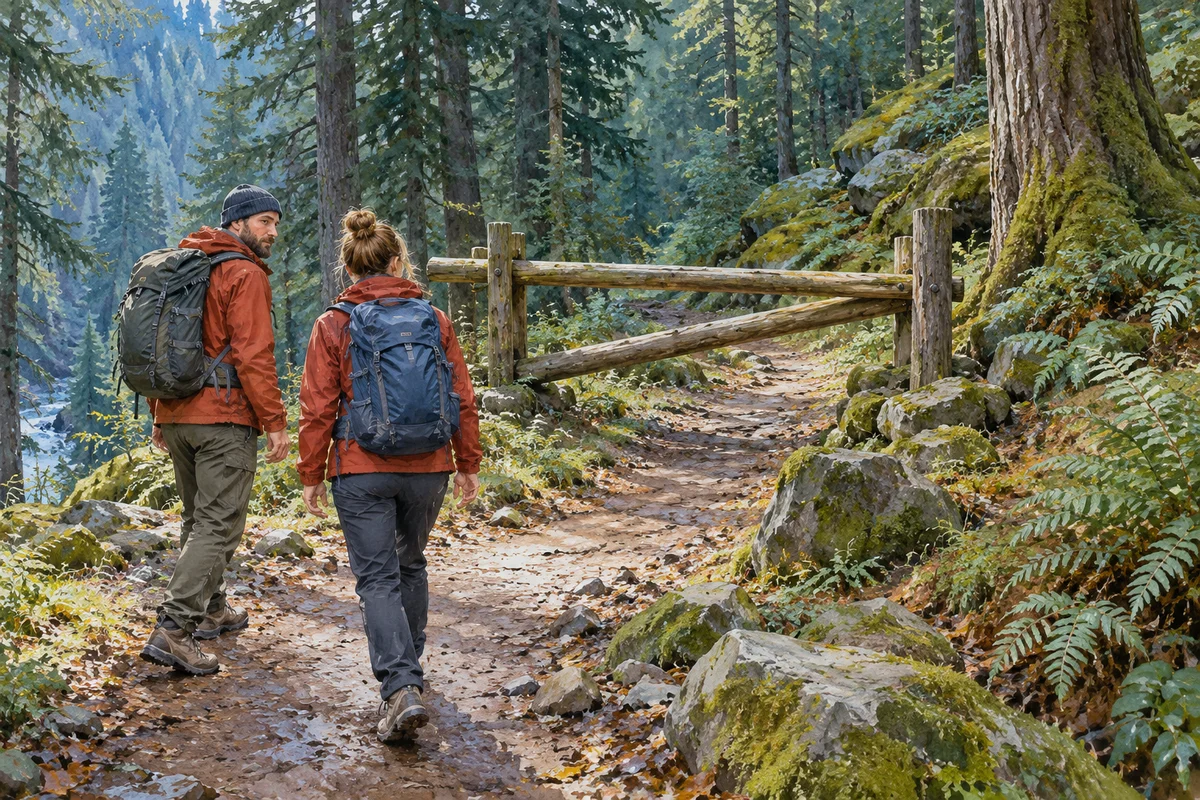
Identify the protected status before leaving
Use official maps and the managing authority's current information to determine whether the route enters a national park, nature reserve or another protected zone. Different designations can carry different access and collecting rules, so do not rely on the word protected alone. Save the relevant boundary and instructions before entering areas with weak reception.
- Consult an official protected-area map.
- Read the managing authority's current rules.
- Check paths, seasonal notices and boundary details.
 Consult an official protected-area map.
Know the strict case of the Swiss National Park
The Swiss National Park applies strict protection and prohibits taking natural objects, including mushrooms. Visitors should remain on marked paths and follow the park's published provisions. Do not collect a specimen for identification or remove surrounding material there. Photograph only when this can be done without leaving the authorised route or disturbing the place. In strict zones, the correct method is to look, document responsibly and leave everything where it is.
Reduce location pressure
Even when photography is permitted, sharing precise coordinates can attract repeated traffic to a sensitive site. Consider publishing the broader region or habitat rather than an exact point, especially for uncommon observations. Do not direct followers across closed ground or off authorised paths. A distribution record submitted to a scientific programme may use different precision and access controls from a public post. Choose the channel and location detail that support knowledge without creating avoidable disturbance or encouraging prohibited collection.
Keep protection and food safety distinct
Before consumption, VAPKO must inspect the complete finds. If legitimately collected specimens cause concern after eating, contact Tox Info Suisse through 145. Use 144 for a life-threatening emergency. No one should be made to vomit. Preserve meal remnants, field photographs and labels. Protection law governs what may be taken, while expert identification governs whether food use can even be considered.
Sources and review

Related guides
Legal framework

Swiss collecting rules
There is no single local rule that covers every Swiss forest.
Responsible practice
Collect responsibly
A forest visit is shared with wildlife, land managers and other people. Collection should remain lawful, modest, traceable and ecologically attentive.
Choosing a sector

Where to look
Look for a readable landscape rather than secret coordinates, then compare habitats, access and conditions while protecting sensitive places.