Contents
 Contents
How to record a useful mushroom observation
A strong observation distinguishes what you saw from what you inferred, so that another person can understand the evidence later.
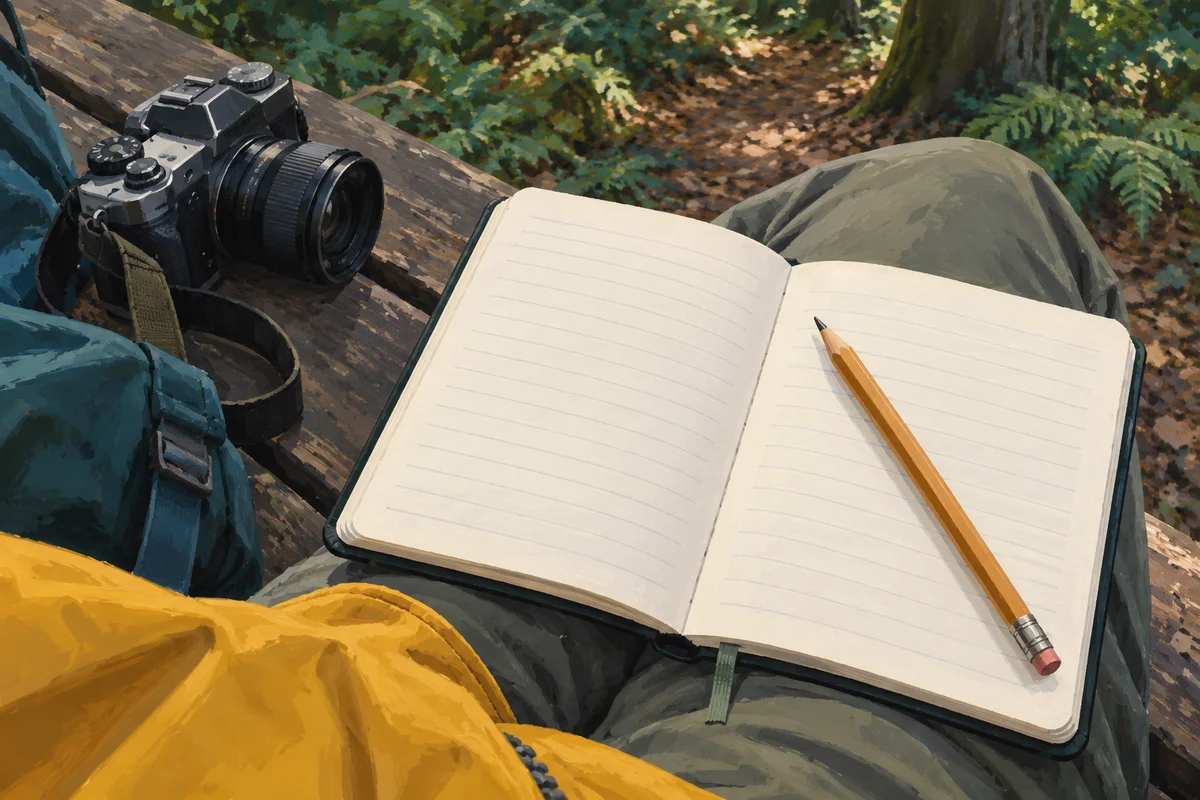
Separate facts from interpretation
Write down direct observations first: date, general place, substrate, growth pattern, visible structures and weather context. Then place tentative identifications or ecological interpretations in a separate field. This prevents a guessed name from silently becoming a recorded fact. If you cannot identify a nearby tree or determine whether buried wood is present, write unknown. Honest gaps make a record more trustworthy and help later reviewers see which additional view or field character would have mattered.
Create a traceable photo record
Give each specimen or group a simple reference and use it in both notes and image filenames. Photograph the habitat, full specimen, cap, underside, stem and base where appropriate and lawful. Do not mix images from nearby specimens unless their connection is certain. Keep the original files and record any editing. A traceable series allows a later reviewer to follow the evidence, while a folder of isolated cap photographs makes it easy to combine characters that never belonged to one individual.
- Assign a unique reference to each observation.
- Link notes and original image files.
- Record direct observations before interpretations.
- Mark missing views and uncertain details explicitly.
 Assign a unique reference to each observation.
Use location with ecological care
A precise coordinate may support scientific recording, but it can also expose a sensitive site when shared publicly. Follow the requirements of the platform or project receiving the record, and reduce public precision when protection is needed. Do not treat another person's observation as a collecting spot. Distribution atlases summarise documented records at suitable scales; they do not guarantee current presence. Your note should help knowledge without encouraging crowding, trespass or pressure on a fragile place.
Update the record without rewriting history
If a qualified person later identifies the specimen, add the determination, date and basis without deleting the original uncertainty. If the evidence remains inadequate, keep the record unresolved. Do not upgrade an image suggestion into certainty because several people repeated it. A transparent record can remain useful even without a species name, especially when its habitat description and photographs are complete and its limitations are easy to see.
Sources and review

Related guides
Field photography

Photograph mushrooms
A useful identification series shows context and structure. It is not a single portrait of the cap and never replaces examination of the specimen.
Habitat literacy

Forest habitats
Habitat gives an observation context, not a species name. Learn to describe visible forest features without filling gaps with assumptions.
Identification method
Observe and identify
A familiar colour or cap shape is only a starting impression. Responsible identification requires several compatible characters from a complete specimen.