Contents
 Contents
Mushroom knives: practical use, limits and safety
A knife can help with careful collection or light cleaning, but it can remove essential features and cause injury when stored badly.
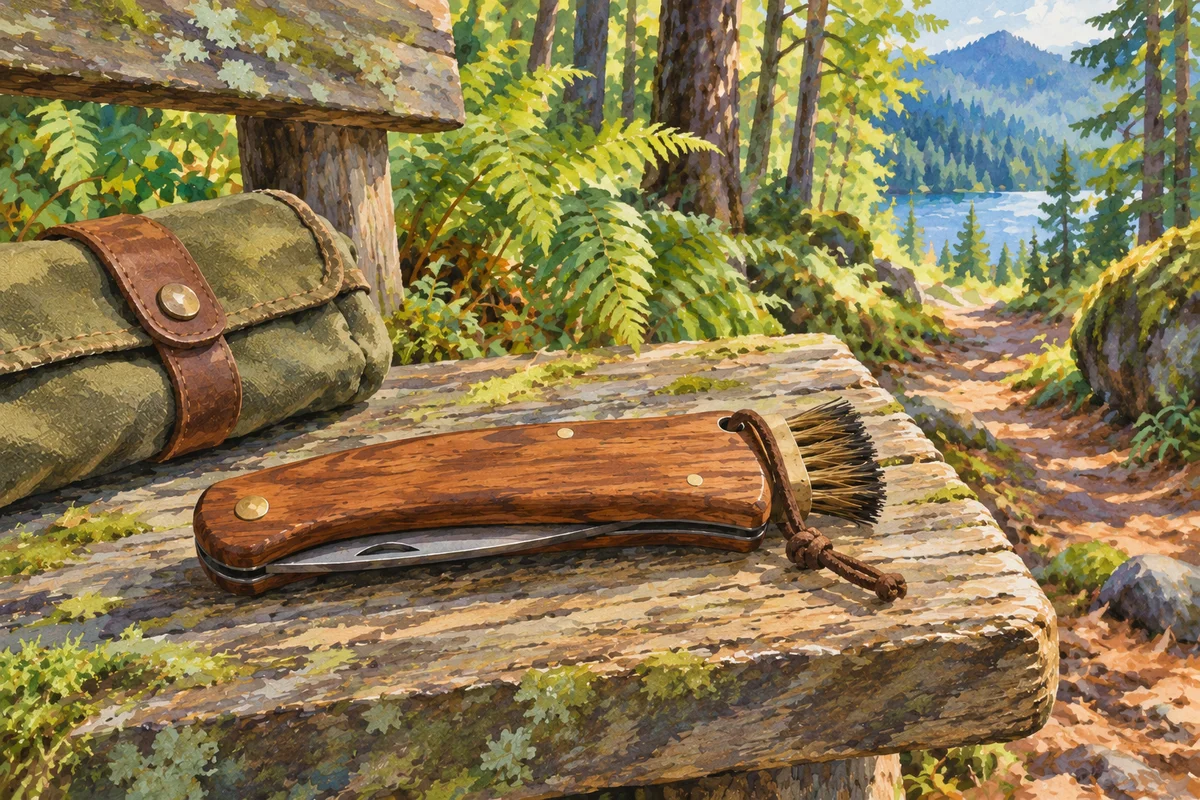
Define a real need
A knife is not required to observe mushrooms. Choose a simple, stable and cleanable tool only when the practice justifies it. A brush, ruler or integrated gadgets matter less than safe handling. No model makes a harvest more reliable, and the accessory should never encourage unnecessary collection.
Preserve the whole specimen
The base and whole specimen can carry features needed for identification or inspection. Cutting every subject at ground level may remove them. Collect only where allowed and useful, retain the complete subject when necessary, then gently close the small opening without disturbing the habitat.
Handle and store it safely
Close or sheath the blade before walking, never work towards the hand and keep the tool away from children. Clean it after the outing and inspect its condition. Local rules, terrain and consideration for other people take priority over a quicker collecting gesture.
- Choose a stable, cleanable tool.
- Preserve the base when it matters.
- Store the blade before walking.
- Separate the tool, food and uncertain specimens.
 Choose a stable, cleanable tool.
Clean without validating
Light cleaning outside can reduce soil in the basket but should not remove features needed for inspection. A cut surface, colour change or smell never identifies a mushroom by itself. A knife does not test toxicity or edibility and cannot repair an old or incomplete specimen. A secure sheath and deliberate handling matter more than specialist branding.
Sources and review

Related guides
Field equipment

Outing equipment
The best kit supports safe movement, complete documentation and careful separation without turning a forest walk into an equipment contest.

Responsible practice

Collect responsibly
A forest visit is shared with wildlife, land managers and other people. Collection should remain lawful, modest, traceable and ecologically attentive.
Before cleaning and cutting
Sorting a harvest
Sorting comes before cleaning, preservation and cooking. It protects features, isolates doubt and prepares the harvest for competent inspection.