Contents
 Contents
Identify mushrooms without dangerous shortcuts
A resemblance starts a comparison; it does not finish one. Learn to seek contradictions and stop when decisive evidence is missing.
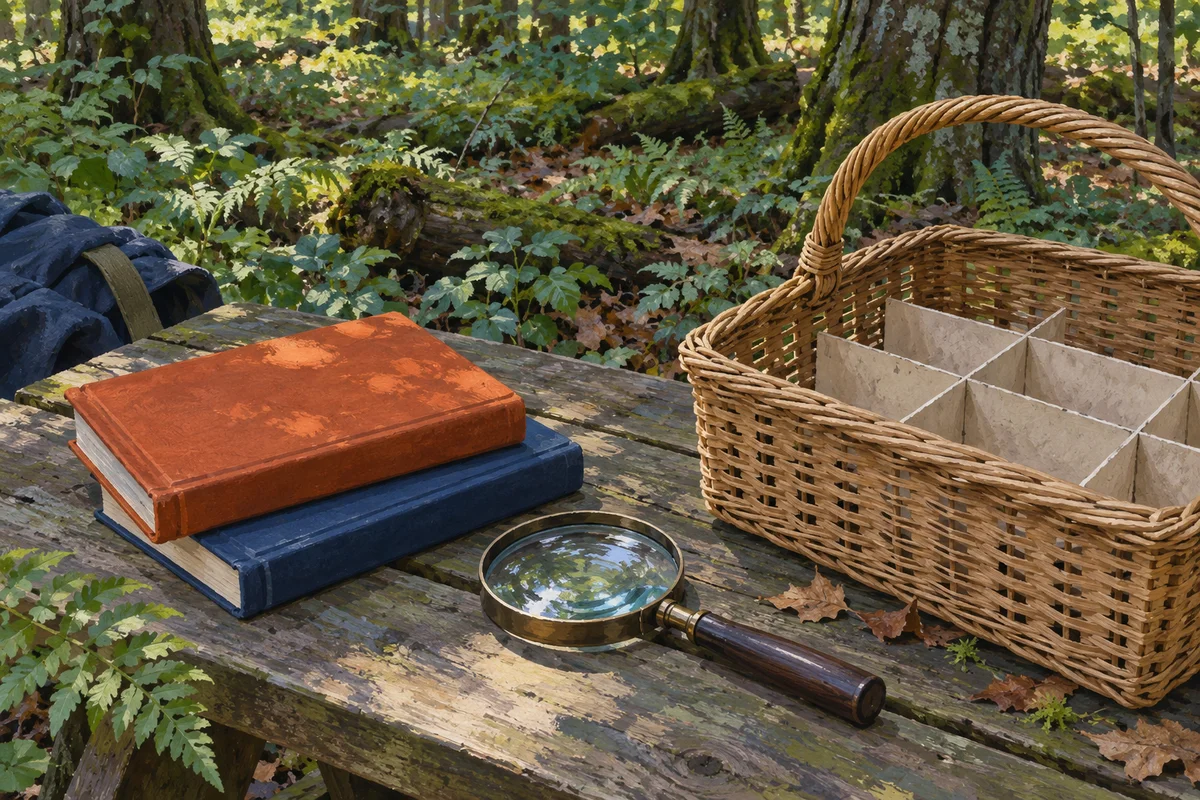
Reject the single-feature match
Colour, size, habitat, smell or cap shape cannot safely carry an identification alone. Different mushrooms may share conspicuous features, and one species can vary across age and conditions. Start with the complete structure and compare several independent characters. A shortcut feels efficient because it removes uncertainty, but it may also remove the very evidence that separates a target from a dangerous lookalike. If the underside, base or another decisive view is missing, do not fill the gap with confidence.
Use tools to question, not certify
Image recognition, search engines, books and MycoRadar can suggest what to examine next. They cannot inspect every physical character, confirm that all photographs show one specimen or assess the condition of a collection. Use each suggestion to build a comparison table and search for incompatible traits. A result that looks precise on screen should make your observation more specific, not make a consumption decision easier.
- List several visible characters before searching for a name.
- Compare at least the relevant documented lookalikes.
- Seek features that would disprove your first hypothesis.
- Stop when a decisive character is missing.
 List several visible characters before searching for a name.
Discard folk tests for edibility
Cooking with silver, watching for animal feeding, judging odour, peeling a cap or relying on colour change cannot establish that a wild mushroom is safe to eat. These familiar claims ignore the diversity of toxins and confusion risks. Do not taste an unknown specimen as an experiment. Edibility is not a property that household tricks can reveal. Use authoritative Swiss safety information, keep complete specimens and obtain a VAPKO control before any collection enters the kitchen.
Make uncertainty stop consumption
Uncertainty itself excludes a specimen from food. Have VAPKO inspect the whole, separated collection. After a suspected ingestion in Switzerland, reach Tox Info Suisse on 145; an acute threat to life requires 144. Vomiting must not be induced. Put aside leftovers, original specimens and the notes linking them to the outing so that specialists can assess the exposure. Apparent familiarity cannot replace this safety pathway.
Sources and review

Related guides
Lookalike method

Compare lookalikes
A good comparison is designed to disprove a favourite hypothesis, not simply collect features that make two mushrooms seem similar.
Poisoning prevention
Toxicity and safety
Toxicity cannot be seen through a universal sign or neutralised by confidence. Prevention depends on reliable control and fast action when exposure is suspected.
Field photography

Photograph mushrooms
A useful identification series shows context and structure. It is not a single portrait of the cap and never replaces examination of the specimen.