Morels and ash trees: a field association to document
In Europe, Morchella esculenta has been observed near common ash and narrow-leaved ash. This proximity alone does not demonstrate a mycorrhizal relationship.
The fact described
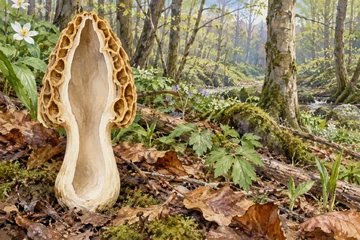
MycoDB reports Morchella esculenta near Fraxinus excelsior and F. angustifolia, as well as other broadleaved trees. This information concerns a species concept and ecological observations. It is not an experiment that establishes exchange between root and fungus on its own.
Name the tree correctly
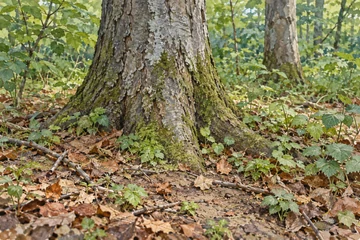
Photograph leaves, twigs or available characters, keeping the fungal specimen distinct. In spring, not all leaves have developed yet. An uncertain tree identification must remain uncertain in the notebook; do not write ‘ash’ because you are looking for morels.
Proximity contains several variables
Record the other trees, litter, debris, visible soil and moisture. A morel observed near an ash tree also shares these environmental factors. Comparing areas with and without ash trees, with similar effort, helps analyse the clue instead of accumulating only positive observations.
Respect the differences within the genus
Taxonomic studies distinguish many species of Morchella. An association reported for M. esculenta does not extend by default to black morels or cultivated systems. Retain the views that allow identification and link tree, taxon, date and location in the same observation record.
 Sources and review